Gynecomastia
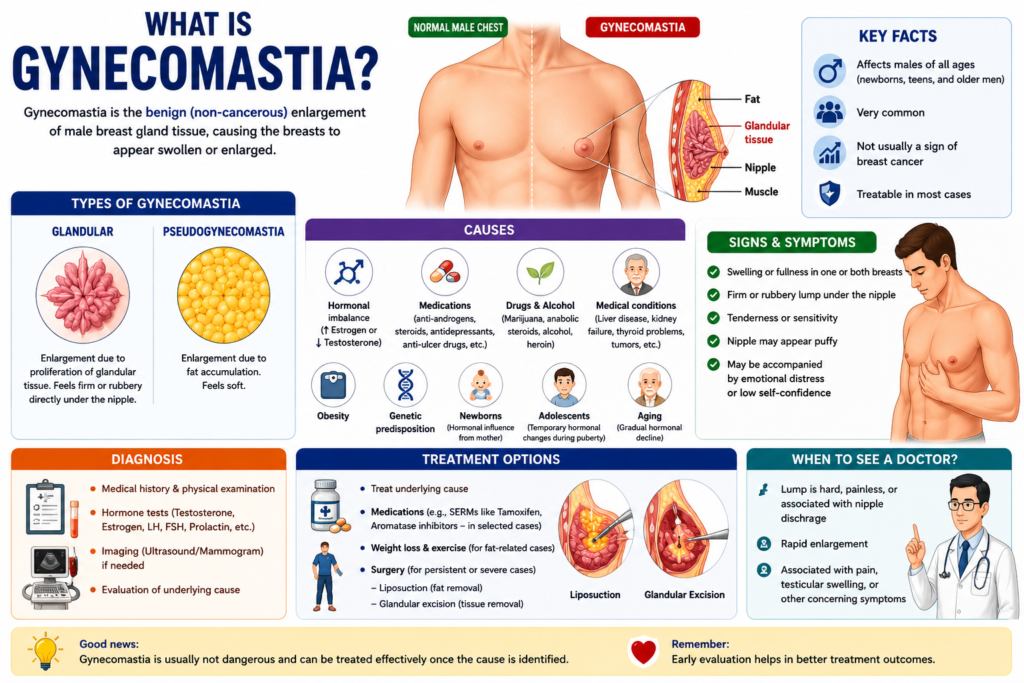
Gynecomastia is the medical term for the enlargement of glandular breast tissue in males. Common alternative names and slang terms include “man boobs,” “moobs,” and “gyno.” Gynecomastia is the enlargement of glandular breast tissue (not fat) in men or boys, caused by an imbalance between estrogen and testosterone hormones. It is highly common during infancy, puberty, or older age. While usually harmless, it can cause physical discomfort and emotional distress. Over 30% of men experience gynecomastia, a medical condition where breast tissue enlarges. You need to understand what causes this enlargement to properly address symptoms. This guide explores your options, from surgical interventions to natural treatments, ensuring you make informed decisions about your health.
Key Takeaways:
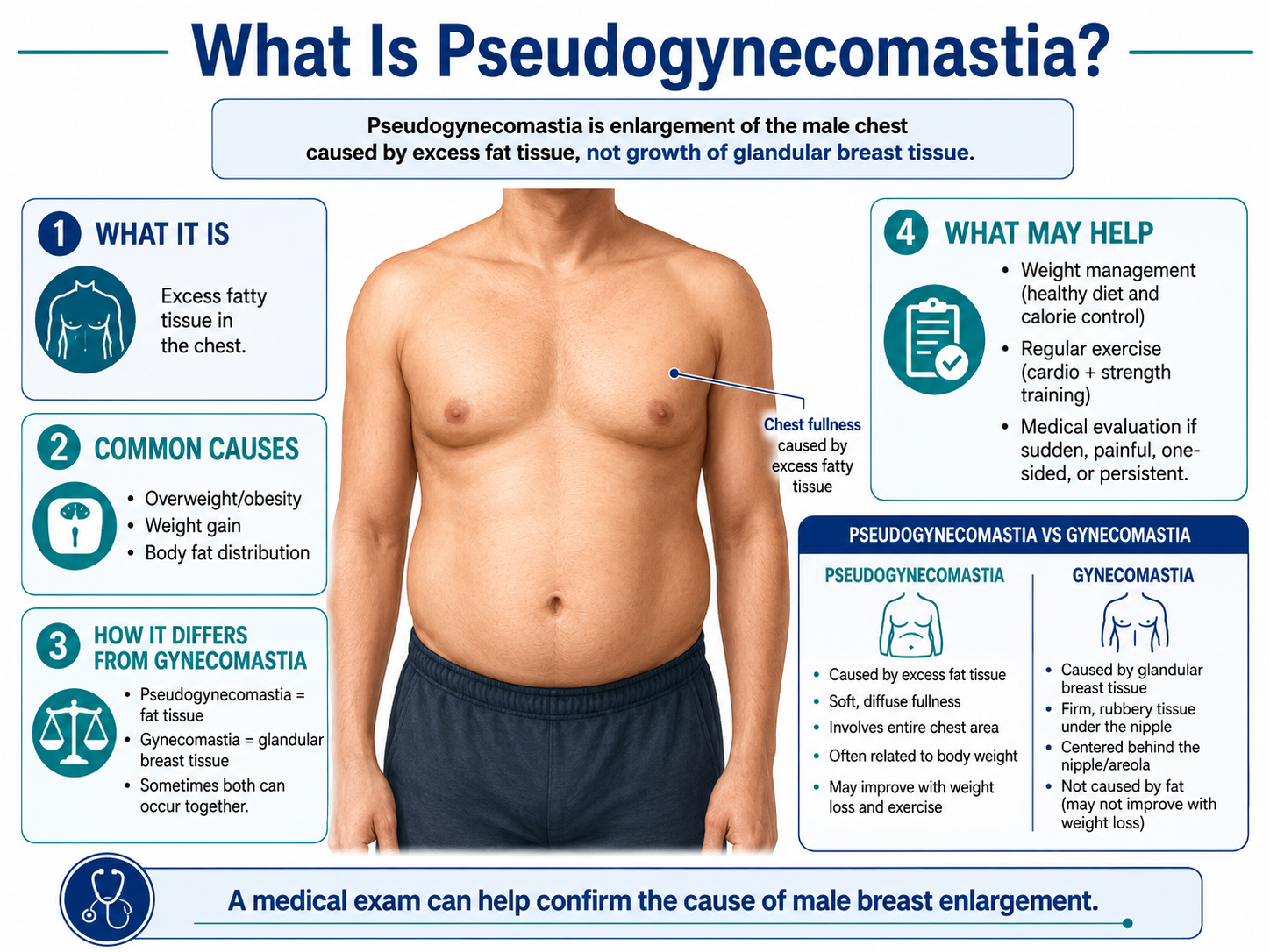
* Gynecomastia is glandular tissue enlargement, distinct from pseudogynecomastia (fat accumulation). A physical exam can differentiate between true glandular tissue and excess fat in the chest area.
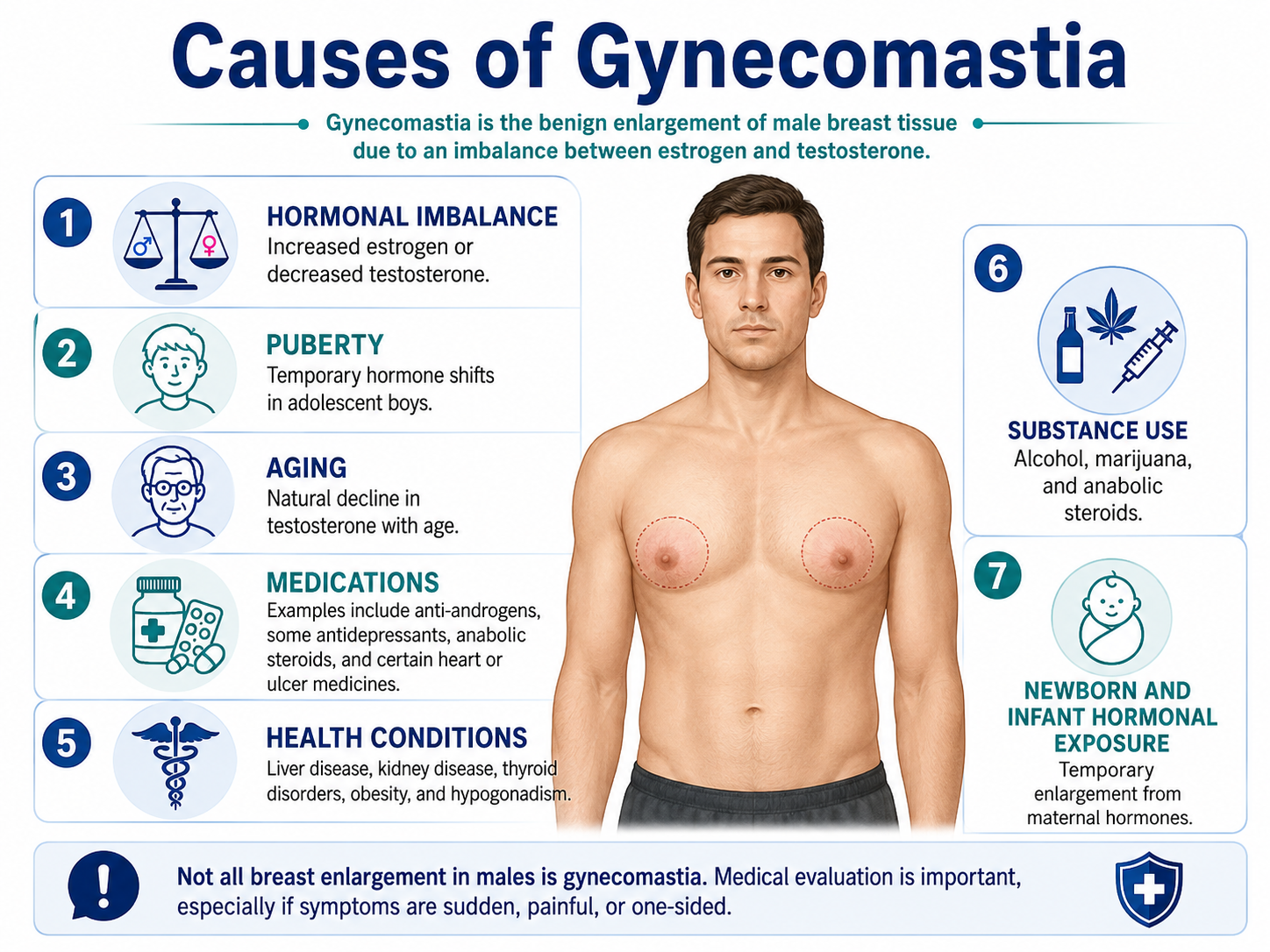
* Hormonal imbalances are the primary cause of gynecomastia. The list includes elevated estrogen, low testosterone, or disruptions in the estrogen-to-androgen ratio, which can occur at various life stages like infancy, puberty, and older age.
* Medications and underlying health conditions can induce gynecomastia. Certain drugs, liver disease, kidney failure, thyroid issues, and tumors can affect hormone levels and lead to breast tissue growth.
* Symptoms go beyond visible breast enlargement. Individuals may experience tenderness, pain, or nipple sensitivity in the affected area, indicating active glandular growth.
* Treatment options range from observation to medical intervention. For many, especially during puberty, gynecomastia resolves naturally. If persistent or bothersome, medical treatments can include hormone therapy or surgical removal of glandular tissue.
* Natural and homeopathic remedies lack scientific backing for true gynecomastia. While lifestyle changes can help with pseudogynecomastia by reducing overall body fat, there’s no evidence that specific natural treatments or homeopathic remedies effectively reduce glandular tissue.
* Diagnosis is imperative for effective treatment. Consulting a doctor for proper diagnosis helps determine the underlying cause and guides the most appropriate course of action, whether it’s monitoring, medication, or surgery.
Primary Causes and Triggers
Understanding the root causes of gynecomastia is vital for effective management and treatment. You might be experiencing this condition due to a complicated combination of factors, often originating from hormonal imbalances, certain medications you are taking, or underlying health conditions that affect male breast tissue development. Identifying these specific triggers within your body is the first step toward finding relief. Exploring the various pathways that lead to gynecomastia reveals a common thread: an imbalance in the delicate dance between estrogen and testosterone. You see, while estrogen is typically considered a female hormone, men also produce it, and an excess can stimulate breast tissue growth. This hormonal shift can be a natural occurrence at different life stages or a symptom of a deeper issue. You should consider that your lifestyle choices and environmental exposures can also play a significant role. Factors beyond internal chemistry, such as diet, exercise, and exposure to certain chemicals, can influence your hormonal balance and contribute to the development of gynecomastia. Pinpointing these external influences can offer avenues for prevention and natural treatment.
Hormonal Fluctuations
Hormonal imbalances are a primary driver of gynecomastia, directly impacting the delicate ratio of estrogen to testosterone in your body. You may experience this imbalance during specific life stages, such as infancy, puberty, and older age, when hormonal shifts are naturally occurring. A higher level of estrogen relative to testosterone can lead to the growth of breast tissue. Your body’s endocrine system, a complex network of glands, is responsible for producing these hormones. Any disruption to this system, whether from natural processes or external factors, can lead to estrogen dominance. This excess estrogen then stimulates the glandular tissue in your breasts, resulting in noticeable enlargement. Recognizing the signs of hormonal fluctuation in your body is important. You might notice other symptoms alongside breast enlargement, such as changes in libido or energy levels, which could indicate an underlying hormonal issue. Consulting with a healthcare professional can help you understand your specific hormonal profile.
External influences and lifestyle choices significantly contribute to the development of gynecomastia, often interacting with your body’s internal chemistry. You might not realize that certain medications you are currently taking can be a direct cause, as they interfere with hormonal pathways or directly stimulate breast tissue. This includes a range of drugs, from those used to treat heart conditions to anti-androgens. Your dietary habits and exposure to environmental toxins also play a role in altering your hormonal balance. You are constantly exposed to chemicals in plastics, pesticides, and personal care products that mimic estrogen in the body, potentially leading to an increase in breast tissue. Limiting your exposure to these endocrine disruptors is a proactive step. You should also consider that certain lifestyle choices, such as excessive alcohol consumption or the use of anabolic steroids, can directly impact your hormone levels. These substances can disrupt the natural production and metabolism of testosterone, leading to an unfavorable estrogen-to-testosterone ratio. Assume that making informed choices about your diet and environment can help mitigate these risks.
- Medications for heart conditions
- Anti-androgens
- Exposure to plastics
- Pesticides in food
- Personal care products
- Excessive alcohol consumption
- Anabolic steroid use Assume that adopting a healthier lifestyle can significantly reduce your risk.
You need to be aware that various external factors, beyond just medications, can trigger or exacerbate gynecomastia. For example, exposure to certain chemicals found in everyday products can mimic estrogen in your body, leading to an imbalance. You should also consider the impact of nutritional deficiencies or excesses, as these can indirectly affect your hormonal regulation. Assume that a holistic approach to your health, encompassing diet, environment, and medication review, is vital for managing and preventing gynecomastia.
Types of Gynecomastia
-
- True (Glandular) Gynecomastia: Caused by an overgrowth of firm, glandular breast tissue. It is often triggered by hormonal imbalances, genetics, or medication. This type feels dense and usually does not respond to weight loss or exercise.
- Pseudogynecomastia (Fatty): Also known as lipomastia or false gynecomastia. The enlargement is caused purely by an excess accumulation of fatty (adipose) tissue rather than glandular growth. It is more common with weight gain or obesity.
- Mixed Gynecomastia: The most common presentation, featuring a combination of both glandular tissue and fatty deposits. It requires a hybrid surgical approach (such as liposuction combined with glandular excision) for optimal contouring.
Clinical Grades of Gynecomastia
-
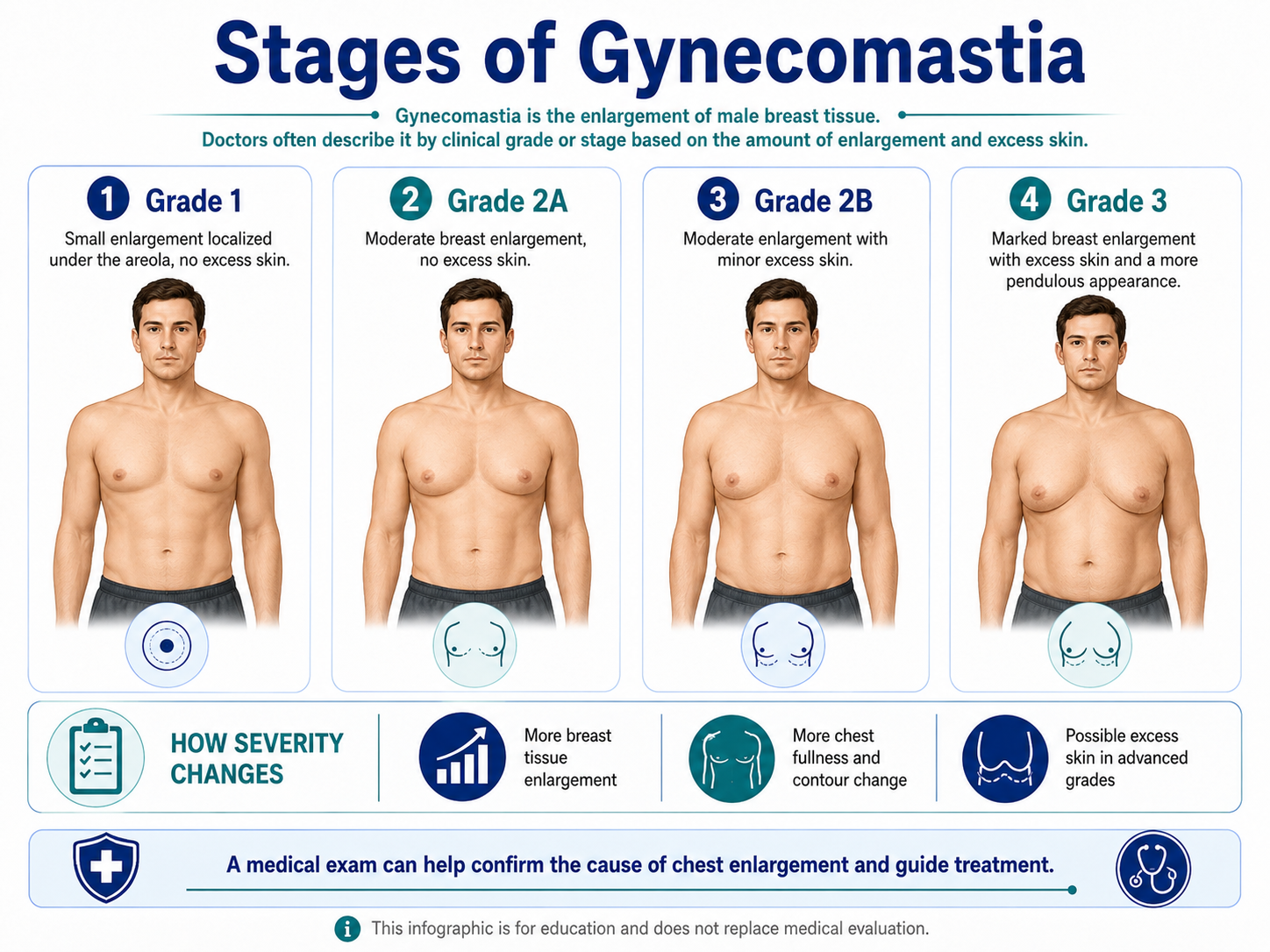
- Grade 1: Minor breast enlargement confined directly to the nipple and areola area (often called “puffy nipples”), with no excess skin.
- Grade 2: Moderate breast enlargement extending beyond the areola, with no excess skin. (Sometimes sub-divided into 2A without skin laxity and 2B with mild skin laxity).
- Grade 3: Moderate breast enlargement accompanied by noticeable excess or sagging skin.
- Grade 4: Marked, severe breast enlargement with significant skin excess, causing the nipple-areola complex to point downward.
- Pubertal/Adolescent Gynecomastia: Occurs in boys aged 9 to 14 due to hormonal fluctuations during development. It typically resolves naturally within a few years as they reach adulthood.
- Asymmetric/Unilateral Gynecomastia: An uneven enlargement where one breast is noticeably larger or more prominent than the other.
Recognizing Clinical Symptoms of Gynecomastia
Identifying the symptoms of gynecomastia is the first step toward diagnosis, typically involving swelling, tenderness, and the growth of firm glandular tissue. You will notice these changes can manifest in various ways, from subtle alterations to more pronounced physical characteristics. Understanding these indicators is imperative for seeking appropriate medical advice and exploring treatment options. These symptoms are not always immediately obvious, and their severity can differ greatly among individuals. You might experience unilateral development, affecting only one breast, or bilateral development, impacting both. The nature of the tissue growth, whether it’s predominantly glandular or a mix of glandular and fatty tissue, also plays a role in how the symptoms present themselves. You should pay close attention to any changes in your chest area, as early recognition can facilitate a more straightforward diagnostic process. The presence of firm glandular tissue, rather than just fatty tissue, is a key differentiator in diagnosing true gynecomastia. This distinction helps medical professionals determine the underlying cause and the most effective course of action.
Physical sensations and discomfort
You might experience a distinct tenderness in the affected breast area, particularly around the nipple. This discomfort can range from a dull ache to a sharp pain, often exacerbated by touch or pressure. The sensation is typically localized to the glandular tissue itself, distinguishing it from general chest muscle soreness. Swelling is another common sensation you will notice, often accompanied by a feeling of fullness or heaviness in the chest. This swelling can make certain movements uncomfortable and may cause a noticeable tightness in your clothing. You might discover that the tenderness and swelling fluctuate, sometimes becoming more pronounced. The presence of firm glandular tissue under the nipple and areola can also lead to an internal feeling of a lump or mass. This firm tissue is a hallmark symptom of gynecomastia, and you can often feel it by gently palpating the area. This sensation is a key indicator that distinguishes gynecomastia from simple fatty deposits.
Visible changes in chest contour
You will observe a noticeable enlargement of one or both breasts, giving the chest a more feminine appearance. This change in contour is a primary visual symptom, often leading individuals to seek medical consultation. The breast development can be asymmetrical, with one side appearing larger than the other. The nipple-areola complex may also appear more prominent or puffy due to the underlying glandular growth. This puffiness can extend beyond the immediate nipple area, contributing to the overall enlarged appearance of the breast. You might notice that your nipples protrude more than usual. A distinct conical or rounded shape can develop in the chest area, rather than the flatter, more masculine contour. This alteration is directly related to the growth of firm glandular tissue beneath the skin. The visible changes in chest contour are often the most distressing aspect of gynecomastia for many individuals. You may also notice that the skin over the affected area appears stretched or taut due to the underlying swelling and tissue growth. This can further accentuate the enlarged appearance of the breasts. The overall change in your chest’s outline can be quite significant, impacting your self-perception and confidence.
Differentiating Gynecomastia from Pseudogynecomastia
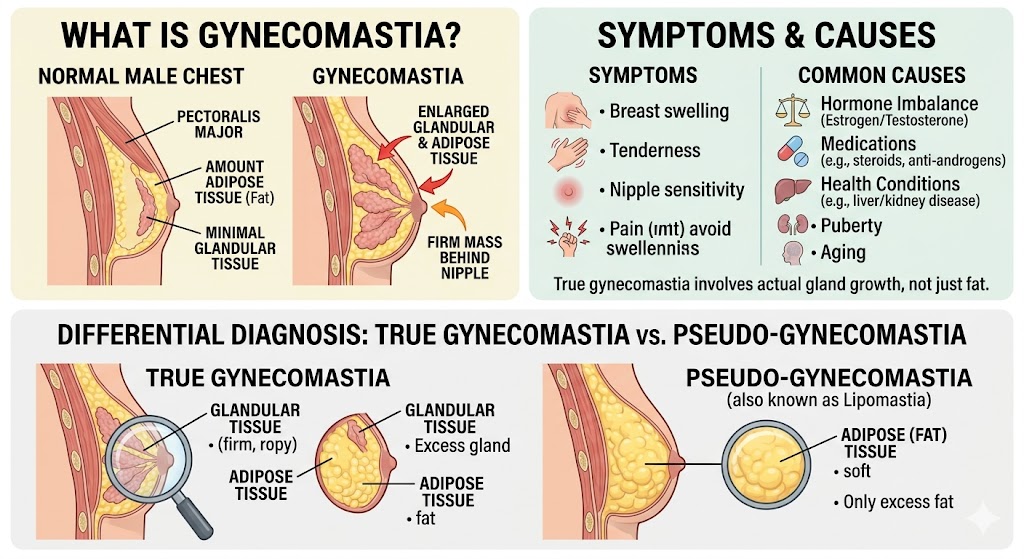 Gaining a clear understanding of your condition starts with distinguishing between true gynecomastia and pseudogynecomastia. You see, while both conditions result in enlarged male breasts, their underlying causes and tissue compositions are quite different. Recognizing these distinctions is the first step toward exploring appropriate treatment options, whether surgical or natural, tailored to your specific situation. Proper identification of the breast tissue’s nature is paramount for effective management. You might feel a lump or generalized fullness, but what that sensation actually represents dictates your next steps. Understanding the difference between these two conditions helps you and your doctor make informed decisions, ensuring you pursue the most effective path for your unique needs. This differentiation guides not just treatment but also your peace of mind. Knowing whether you have glandular tissue or simply excess fat can alleviate concerns and provide clarity. Your journey to addressing male breast enlargement becomes much clearer once you grasp these fundamental differences.
Defining Pseudogynecomastia
Pseudogynecomastia, in contrast to true gynecomastia, involves fat deposits rather than true glandular growth. You imperatively have an accumulation of adipose tissue in the chest area, creating the appearance of enlarged breasts. This condition is often associated with generalized obesity, meaning that as you gain weight throughout your body, your chest area may also accumulate fat. This condition does not involve an overgrowth of mammary gland tissue, which is the hallmark of true gynecomastia. Your breast tissue itself remains normal in size; it is simply surrounded by or embedded within excess fat. This distinction is fundamental to diagnosis and treatment planning. You might notice that the breast tissue feels soft and uniform to the touch, lacking the firm, sometimes tender, central mass associated with glandular tissue. This textural difference often provides an initial clue during a physical examination, helping medical professionals begin to differentiate it from its glandular counterpart.
Comparison of tissue composition
Understanding the actual makeup of the tissue in your chest is central to distinguishing between these two conditions. True gynecomastia is characterized by the proliferation of glandular tissue, which can feel firm and sometimes lumpy behind the nipple-areolar complex. This is the actual mammary gland growing larger. Conversely, pseudogynecomastia involves fat deposits, which feel soft and diffuse throughout the chest area. You will not find the distinct, firm nodule characteristic of glandular tissue. This difference in tactile sensation is a key diagnostic indicator that medical professionals use during examination. This table provides a quick overview of the primary differences in tissue composition: Tissue Composition: Gynecomastia vs. Pseudogynecomastia
| Characteristic | Gynecomastia | Pseudogynecomastia |
| Primary Tissue | Glandular tissue | Adipose (fat) tissue |
| Texture | Firm, sometimes lumpy | Soft, diffuse |
| Location of Growth | Behind nipple-areolar complex | Throughout chest area |
You will discover that during a physical examination, a doctor can often discern the difference through palpation alone. The presence of a palpable, rubbery mass directly beneath the nipple suggests glandular tissue, indicating gynecomastia. If the tissue feels uniformly soft and movable, consistent with fat, it points towards pseudogynecomastia. This initial assessment guides further diagnostic steps, such as imaging, to confirm the nature of the breast enlargement.
| Diagnostic Indicators | Indicator | Gynecomastia | Pseudogynecomastia |
| Palpation | Firm | rubbery mass | Soft, movable tissue |
| Tenderness | Often present | Rarely present |
Gynecomastia: Diagnostic Procedures and Testing
Confirming a diagnosis of gynecomastia requires a thorough evaluation by medical professionals. You will undergo a gynecomastia or pseudogynecomastia test to precisely determine the nature of your chest enlargement. This initial assessment is crucial for differentiating between true glandular breast tissue and excess fatty tissue, which often appear similar.
Your doctor will consider your medical history and current symptoms during this diagnostic phase. They will ask about any medications you are taking, pre-existing conditions, and the duration of your chest enlargement. This comprehensive approach ensures that we identify and address all potential contributing factors.
A precise diagnosis guides the subsequent treatment plan, whether it involves surgery or natural interventions. Understanding the exact cause and type of your chest enlargement is fundamental to achieving the best possible outcome. You will receive clear explanations throughout this process.
Physical examination techniques
A physical examination forms the cornerstone of diagnosing gynecomastia. Your medical professional will carefully palpate your chest to assess the texture and distribution of the tissue. They will be looking for a firm, rubbery mass, typically concentric to the nipple, which indicates true glandular gynecomastia.
The doctor will also differentiate between glandular tissue and excess fat during this examination. Pinching the tissue between their thumb and forefinger helps determine if the enlargement is primarily fatty (pseudogynecomastia) or glandular. This distinction is a key component of the gynecomastia or pseudogynecomastia test.
You may also be asked to perform certain movements or positions to help the doctor further evaluate the chest area. This comprehensive physical assessment allows for a preliminary determination of the underlying cause of your chest enlargement, guiding further diagnostic steps if necessary.
Clinical diagnostic tools
Beyond the physical examination, specific clinical diagnostic tools provide a more detailed insight into your condition. You might undergo blood tests to check hormone levels, particularly testosterone and estrogen, as imbalances can contribute to gynecomastia. These tests help identify potential endocrine causes.
Imaging studies, such as mammography or ultrasound, are sometimes employed to visualize the chest tissue more clearly. These techniques can precisely distinguish between glandular tissue and fatty tissue and rule out other potential causes of chest enlargement, like tumors. Such imaging is often a part of the comprehensive gynecomastia or pseudogynecomastia test.
A biopsy, though less common, may be recommended if there are any suspicious findings during the physical exam or imaging. This involves taking a small tissue sample for microscopic analysis, providing a definitive diagnosis and ruling out more serious conditions. You will be informed if this step is necessary.
These clinical diagnostic tools provide crucial objective data that complements the physical examination. They help medical professionals accurately identify the specific type and cause of your chest enlargement, ensuring you receive the most appropriate and effective treatment plan. The information gathered from these tests is invaluable in making informed decisions about your care.
Medical and Modern Treatment Pathways for Gynecomastia
You have several options when considering treatment for gynecomastia, with approaches spanning from established surgical methods to innovative, recently developed treatments. These newer interventions are specifically designed for tissue reduction, offering alternatives to more invasive procedures. Your choice will depend on the underlying cause, the severity of your condition, and your personal preferences regarding recovery and outcomes. Understanding the full spectrum of available treatments is key to making an informed decision about your health. You can explore different pathways that aim to reduce breast tissue, whether through direct removal or through less invasive means. Each treatment type brings its set of considerations regarding effectiveness, potential side effects, and recovery time. Exploring these options with your healthcare provider will help you determine the most appropriate course of action. You should discuss the benefits and drawbacks of each approach, ensuring that the chosen treatment aligns with your lifestyle and expectations for results. The goal is to achieve a satisfactory outcome that improves your comfort and confidence.
Surgical intervention for genycomastia and recovery
Traditional surgery remains a highly effective method for treating gynecomastia, especially in cases where significant glandular tissue or excess skin is present. This approach directly removes the unwanted breast tissue, providing immediate and often dramatic results. You can expect a more defined chest contour following this procedure. The recovery period after surgical intervention typically involves some swelling and bruising, which subsides over several weeks. You will likely be advised to wear a compression garment to help reduce swelling and support the healing tissues. Following your surgeon’s post-operative instructions diligently is imperative for optimal recovery and minimizing complications. Returning to normal activities will be a gradual process, with most individuals able to resume light activities within a few days to a week. You should avoid strenuous exercise and heavy lifting for several weeks to allow your body to heal properly. Long-term results from surgery are generally excellent, offering a permanent solution for many.
Emerging pharmacological treatments for moobs
New treatment options for gynecomastia are continuously being developed, with a focus on non-surgical tissue reduction. These innovative approaches often use pharmacological interventions to target the underlying hormonal imbalances or directly reduce glandular tissue. You might find these less invasive alternatives appealing if surgery is not your preferred path. These new treatments for gynecomastia aim to reduce tissue by changing hormone levels or blocking tissue growth factors. Discuss these new treatments with your doctor to understand how they apply to your situation. Their effectiveness can vary depending on the cause and type of gynecomastia you experience. Considering these newer options provides you with a broader range of choices beyond traditional surgery. You will want to weigh the potential benefits against any possible side effects and the time frame for achieving desired results. Your doctor can provide detailed information on the latest advancements and determine if you are a suitable candidate for these emerging therapies. Emerging pharmacological treatments represent a promising frontier in gynecomastia management, offering less invasive alternatives to surgery. These new treatments, often involving medications, focus on reducing breast tissue by addressing hormonal factors or directly inhibiting the growth of glandular tissue. You might find these options beneficial if your gynecomastia is primarily glandular and you prefer to avoid surgical procedures.
Natural and Homeopathic Approaches to Gynecomastia Management
For individuals exploring non-surgical solutions, natural treatment for gynecomastia and homeopathy for gynecomastia present compelling alternatives. You might find comfort in knowing that these methods focus on addressing the root causes and imbalances within your body, rather than just the visible symptoms. Many people discover that a holistic approach can lead to significant improvements, often without the need for invasive procedures. You have various options to consider when exploring these pathways. These non-invasive approaches often involve a combination of lifestyle adjustments, dietary changes, and targeted remedies designed to restore hormonal balance. The goal is to encourage your body’s natural healing processes and reduce glandular tissue. One particular avenue of interest is the use of a specific homeopathic remedy for gynecomastia, which practitioners often recommend based on individual symptoms and constitution. This tailored approach ensures that the treatment aligns with your unique physiological profile, making it a personalized and potentially effective choice.
Lifestyle and Dietary Management
Your daily habits play a significant role in managing gynecomastia naturally. Making conscious choices about what you eat and how you live can profoundly impact your hormonal balance and overall well-being. Focusing on a nutrient-dense diet and regular physical activity can create an environment conducive to reducing glandular tissue. Consider incorporating more whole foods, fresh fruits, and vegetables into your diet while minimizing processed foods and those high in unhealthy fats. You should also ensure adequate hydration and consider reducing your intake of substances that might disrupt hormone levels. This mindful approach to nutrition can support your body’s natural detoxification processes. Engaging in regular exercise, particularly activities that build muscle mass, can help to optimize your body composition and potentially influence hormone regulation. You will find that maintaining a healthy weight is a key factor in managing gynecomastia, as excess body fat can contribute to hormonal imbalances.
Homeopathic Protocols and Remedies for Gynecomastia
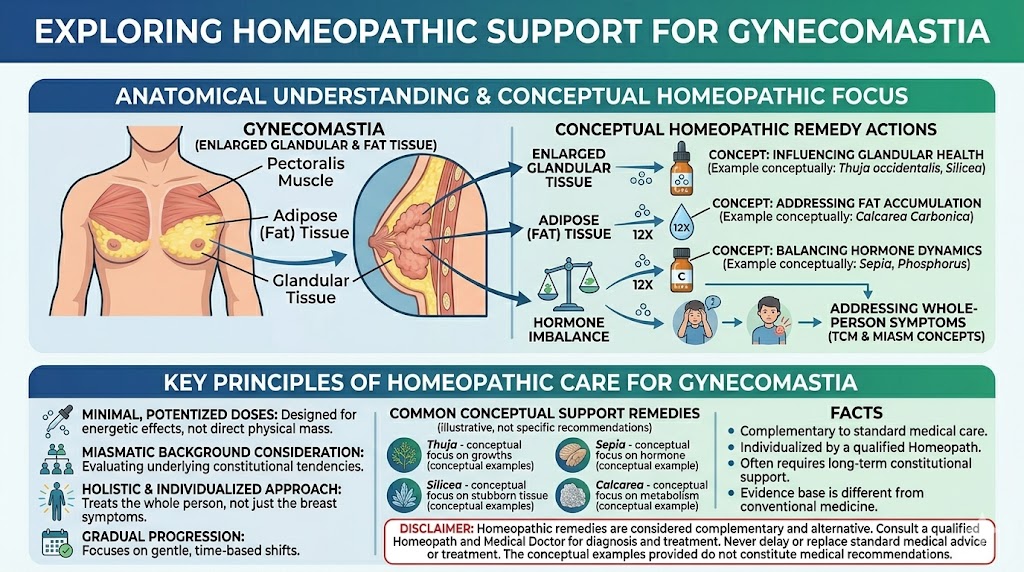
Homeopathy offers a distinct approach to treating gynecomastia, focusing on individualized remedies that match your specific symptom picture. Practitioners will conduct a thorough assessment to understand your unique physical and emotional presentation before recommending a course of treatment. This highly personalized method aims to stimulate your body’s innate healing capabilities. You might be surprised by the gentle yet powerful nature of homeopathic remedies, which we prepare through a process of serial dilution and succussion. The chosen remedy works by signaling your body to rebalance itself, addressing the underlying hormonal dysregulation that contributes to gynecomastia. This subtle influence can lead to gradual but lasting improvements. A specific homeopathic remedy for gynecomastia is often prescribed, selected after a detailed case-taking process. This particular remedy is chosen based on its known affinity for glandular issues and hormonal imbalances and its ability to resonate with the individual’s overall symptom pattern. You will find that consistency in taking the prescribed remedy is key to achieving optimal results. This specific homeopathic remedy for gynecomastia is identified through a detailed individual assessment, where a homeopathic practitioner considers not only the physical signs of gynecomastia but also your overall health, emotional state, and unique constitutional traits. The selection of this remedy is not generic; it is a precise match to your personal symptom totality, aiming to guide your body gently back to a state of equilibrium.
-
- Conium Maculatum: This remedy is often prescribed for breast tissue hardness, induration, and tenderness, especially when low testosterone or high estrogen levels are involved.
- Phytolacca Decandra: Recommended for treating pain, soreness, and sensitive or swollen breast tissue.
- Pulsatilla: Frequently suggested during puberty or when gynecomastia is accompanied by emotional sensitivity and hormonal shifts.
- Calcarea Carbonica: Used for men who are obese or flabby and experience hot, swollen breast glands along with physical and mental fatigue.
- Baryta Carbonica: Often suited for infants or older individuals experiencing auxiliary gland pain and breast enlargement.
To wrap up
Summing up, you now possess a comprehensive understanding of gynecomastia, from its varied causes and presenting symptoms to the diverse treatment options available. You have learned that accurate identification of the specific type of gynecomastia or pseudogynecomastia is paramount for effective management. This initial diagnostic step will guide you toward the most appropriate course of action, whether that involves surgical intervention, exploring natural treatments, or considering homeopathic remedies.
Your journey toward addressing gynecomastia begins with this foundational knowledge. You are now equipped to recognize the key indicators that distinguish true gynecomastia from pseudogynecomastia, a distinction that directly influences treatment efficacy. Each treatment path, be it surgical correction, a regimen of natural remedies, or a homeopathic approach, carries its set of considerations and potential outcomes. Your informed decision-making will be critical in selecting the option best suited to your individual circumstances and health goals.
Bear in mind, your health professional can offer personalized guidance through this process. You can confidently discuss the various treatment avenues, knowing that your understanding of the condition allows for a more productive conversation. Your proactive engagement in understanding your specific type of gynecomastia or pseudogynecomastia is truly the first step toward achieving a favorable resolution and improved well-being.
Here are detailed FAQ questions and answers about gynecomastia, following your specific writing guidelines

Q: What exactly is gynecomastia, and how does it differ from pseudogynecomastia?
A: Gynecomastia describes the benign enlargement of male breast tissue. This condition results from an imbalance between estrogen and testosterone hormones, leading to actual growth of glandular tissue behind the nipple and areola. A firm, rubbery, or dense mass is often palpable in this area.
Pseudogynecomastia, in contrast, involves an accumulation of fatty tissue in the breast area without any true glandular enlargement. This condition is common in men who are overweight or obese. The feel of pseudogynecomastia is typically soft and fatty, lacking the distinct firmness of glandular tissue. Differentiating between the two often requires a physical examination by a doctor, who can feel for the presence of glandular tissue.
Q: What are the common causes of gynecomastia?
A: Gynecomastia can stem from a variety of factors, often related to hormonal shifts. Puberty is a common time for transient gynecomastia to appear as boys experience fluctuating hormone levels. This condition usually resolves on its own. Aging can also lead to gynecomastia, as testosterone levels naturally decline in older men, shifting the estrogen-to-testosterone balance.
Certain medications can induce gynecomastia as a side effect. These include some anti-androgens, anabolic steroids, antidepressants, heart medications, and ulcer drugs. Underlying medical conditions, such as liver disease, kidney failure, hyperthyroidism, or tumors affecting hormone production, can also contribute. Lifestyle choices like excessive alcohol consumption or recreational drug use (marijuana and heroin) also contribute to its development.
Q: What symptoms should I look for if I suspect I have gynecomastia?
A: The primary symptom of gynecomastia is a noticeable swelling of breast tissue in one or both breasts. This swelling often feels firm or rubbery and is usually concentrated directly under the nipple. Some men experience tenderness or pain in the affected breast area, particularly when touched. The nipple itself might become more sensitive.
Discharge from one or both nipples is a less common but possible symptom, requiring immediate medical evaluation. If you observe any of these changes, especially if they are new or worsening, consulting a healthcare professional is advisable for proper diagnosis and to rule out other conditions.
Q: How is gynecomastia diagnosed, and what tests might be involved?
A: Diagnosing gynecomastia typically begins with a thorough physical examination by a doctor. The doctor will assess your breast tissue for firmness, tenderness, and the presence of glandular tissue, distinguishing it from fatty tissue. They will also review your medical history, including any medications you are taking and your lifestyle habits.
Blood tests are often ordered to measure hormone levels, such as testosterone, estrogen, LH, FSH, and thyroid hormones, to identify any hormonal imbalances. In some cases, imaging tests like a mammogram or ultrasound of the breast might be performed to obtain a clearer view of the tissue and rule out other potential causes, such as breast cancer, although male breast cancer is rare. A biopsy is rarely needed but may be considered if there are suspicious findings.
Q: What are the treatment options for gynecomastia, including both surgical and natural approaches?
A: Treatment for gynecomastia depends on its cause, severity, and the patient’s discomfort. If a specific medication or underlying condition is identified as the cause, addressing that issue can resolve the gynecomastia. In cases of pubertal gynecomastia, spontaneous resolution is common, so observation is often recommended.
Medications like tamoxifen or raloxifene, which block estrogen’s effects, may be prescribed in some cases, particularly for painful or severe gynecomastia. Surgical removal of the glandular tissue, often combined with liposuction to remove excess fat, provides a permanent solution for persistent or bothersome gynecomastia.
Natural approaches lack strong scientific evidence for reversing established glandular gynecomastia. Some individuals explore dietary changes, supplements (e.g., zinc, vitamin D, omega-3 fatty acids), or herbal remedies (e.g., saw palmetto, chrysin) believed to influence hormone balance. Homeopathy for gynecomastia involves highly diluted substances; its effectiveness for this condition is not supported by scientific research. Always discuss any natural treatments with a doctor, as they can interact with medications or have unforeseen effects.
Q: Are there any new or emerging treatments for gynecomastia?
A: While surgical excision and liposuction remain the gold standards for permanent gynecomastia correction, research continues into less invasive options. Some studies explore the use of newer topical creams or gels designed to modulate hormone activity in the breast tissue, although these are not yet widely adopted or fully proven.
Innovations in surgical techniques aim for smaller incisions and faster recovery times. For instance, advanced liposuction methods can reduce fat and some glandular tissue with minimal scarring. The focus is often on refining existing methods to improve cosmetic outcomes and patient satisfaction. Exploring underlying causes with genetic testing in complex cases is another area of ongoing investigation, helping personalize treatment plans.
Q: Can lifestyle changes help prevent or manage gynecomastia?
A: Lifestyle adjustments can certainly play a role in managing and potentially preventing certain types of gynecomastia. Maintaining a healthy weight through a balanced diet and regular exercise can prevent pseudogynecomastia and may help reduce the fatty component in true gynecomastia. Limiting alcohol consumption and avoiding recreational drugs known to affect hormone levels can also be beneficial.
Eating a diet rich in whole foods, fruits, and vegetables, while reducing processed foods, supports overall hormonal health. Engaging in strength training can increase muscle mass and may strengthen the body’s natural testosterone production. Always review your medications with your doctor to identify any that might be contributing to gynecomastia and discuss potential alternatives.
Treatments for Gynecomastia at the Philadelphia Homeopathic Clinic
Doctor Tsan has extensive homeopathic experience treating gynecomastia. Use our secure online system or contact us at (267) 403-3085 to schedule an appointment for a homeopathic consultation. You will meet Victor Tsan, MD, who will handle your problem.