Cracked Heels
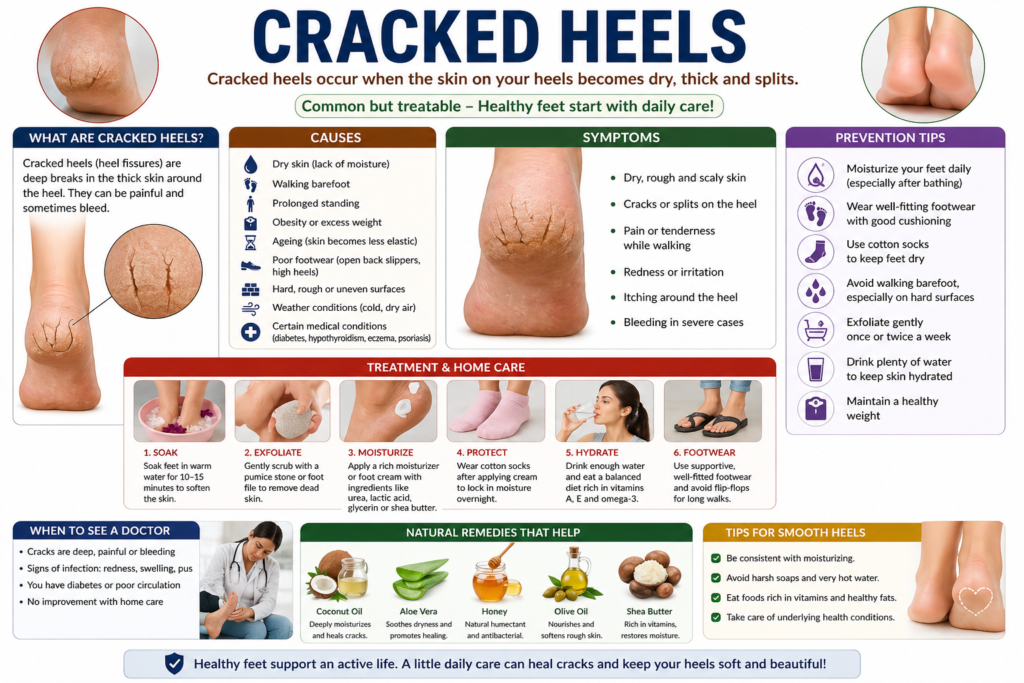
The medical term for dry, cracked heels is heel fissures. These are deep, linear cracks that develop within thickened, callused skin, often caused by severe dryness or friction. When the skin on the feet is excessively dry, it is referred to as xerosis. Cracked heels often begin with dry skin, but the real issue lies in the deeper structural damage caused by pressure and tension on the heel. When your heel expands outward under body weight, the skin stretches and splits, especially if it’s thickened or calloused. What causes cracked heels? Factors like standing for long hours, wearing open-back shoes, or walking barefoot increase strain on the heel’s fat pad, making splits more likely. Without proper care, these fissures can deepen and even bleed.
Environmental and lifestyle factors play a major role in weakening your heel’s resilience. Hot, dry climates and prolonged exposure to water, like frequent showers or swimming, strip natural oils from your skin. Wearing unsupportive footwear or being overweight adds mechanical stress.
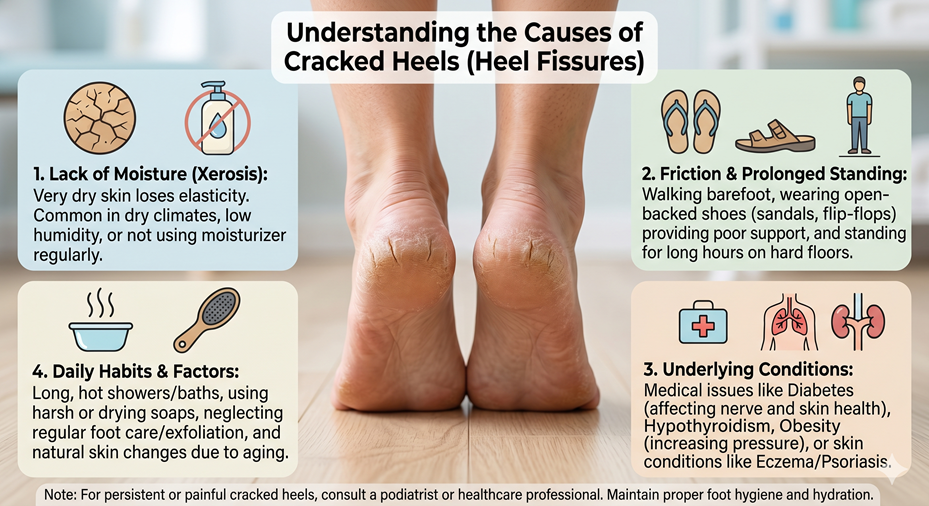
Environmental and Lifestyle Factors that Trigger Cracks in Heels
- Living in low-humidity environments that dry out skin
- Wearing flip-flops or sandals that expose heels to friction
- Spending long hours on your feet, especially on hard surfaces
The constant pressure without adequate support makes your heels prone to cracking.
Nutritional Deficiencies and Internal Triggers for Cracked Heels
Are cracked heels a vitamin deficiency? Yes, low levels of vitamin E, vitamin A, and important fatty acids can impair skin repair and moisture retention. Deficiencies in B vitamins, particularly biotin (B7), are linked to dry, scaly skin and brittle nails. Hormonal imbalances like hypothyroidism or diabetes also reduce circulation and skin elasticity, increasing your risk. What causes your heels to crack? Internal health issues often first appear on your skin.
Nutritional gaps directly affect your skin’s ability to stay supple and heal. Without enough omega-3 fatty acids, your skin barrier weakens, making it easier for cracks to form. People with diabetes often experience cracked heels due to reduced sweat production and nerve damage. The connection between internal health and foot condition is well-documented, showing that healing starts from within.
Recognizing Symptoms and Severity of Cracked Heels
Identification of Deep Skin Fissures
Deep cracks in heels often begin as shallow lines but can progress into painful fissures that extend into deeper layers of skin. You may notice these splits most often along the outer edge of the heel, where the skin bears the most pressure during walking. When left untreated, these fissures deepen, making each step uncomfortable and increasing the risk of infection.
Your skin’s appearance gives clear clues about the severity of the condition. Initially, the area may feel rough and look dry, but over time, the skin thickens and loses flexibility. This hardening sets the stage for deep cracks in heels, especially when exposed to constant pressure or dry environments. The fissures may appear white or yellowish at first, darkening as they worsen.
Cracked, bleeding heels signal an advanced stage of fissuring. Once the split penetrates the dermis, small blood vessels can rupture, leading to visible bleeding. You might see redness or oozing around the crack, indicating tissue damage. At this point, even wearing closed shoes becomes painful, and daily activities are disrupted.
Complications of Bleeding and Pain
Bleeding from cracked heels isn’t just uncomfortable—it opens a pathway for bacteria like Staphylococcus aureus to enter. You become vulnerable to infections that can escalate quickly, especially if you have underlying conditions like diabetes. Left unchecked, these infections may lead to cellulitis or more profound tissue involvement requiring medical intervention.
Pain from deep fissures alters the way you walk, shifting weight to other parts of the foot. Over time, the condition can cause secondary issues such as plantar fasciitis or joint strain. The discomfort often worsens with prolonged standing or walking, making it harder to stay active. Ignoring the pain only allows the cracks to deepen, increasing the risk of complications.
Cracked bleeding heels can also lead to chronic skin changes, including calloused borders around the fissure that resist healing. You may find that moisturizers no longer help, and minor trauma reopens the wound repeatedly. This cycle delays recovery and increases the chance of scarring or permanent skin damage.
When bleeding and pain persist, the impact extends beyond physical discomfort. Daily routines, work performance, and even sleep can all affect each other. You might avoid going barefoot or wearing certain shoes, limiting mobility and quality of life. Early attention to symptoms prevents these outcomes and supports faster, more effective healing.
Effective Home Remedies for Cracked Heels and Self-Care
Intensive Moisturizing for Dry Feet
Your skin’s ability to retain moisture declines with age and exposure, making daily hydration important in how to heal cracked heels. Applying thick emollients like petroleum jelly or shea butter at night and covering feet with cotton socks can dramatically improve skin texture within two weeks. You should moisturize at least twice daily, focusing on the heels and areas with visible fissures. Products containing urea (10-20%), lactic acid, or glycerin are clinically proven to soften calloused skin and support barrier repair. Skipping moisturizer after showering, when pores are open, wastes a key opportunity to lock in hydration. Consistent application over 3-4 weeks typically results in noticeable improvement in most cases of dry feet and cracked heels.
Many over-the-counter creams promise fast results, but natural oils such as coconut or almond oil offer comparable benefits without synthetic additives. These oils penetrate deeply and contain fatty acids that reinforce the skin’s lipid layer. You’ll see better outcomes if you apply them after gently exfoliating with a pumice stone. Doing so removes dead skin cells that block absorption. For best results, use lukewarm water for 10-15 minutes before moisturizing to open pores and enhance product uptake. Avoid hot water, which strips natural oils and worsens dryness.
Healing cracked heels isn’t just about what you apply—it’s also about consistency and timing. Nighttime treatment is especially effective because feet remain undisturbed for hours. Slathering on a thick layer of moisturizer and wearing snug socks creates an occlusive environment that boosts absorption. Some people report visible softening after just three nights of this routine. For persistent dryness, consider using a humidifier in your bedroom to prevent overnight moisture loss. This simple addition supports skin recovery and complements your daily regimen.
Natural Topical Applications and Soaks
Honey has been used since ancient times for its antibacterial and healing properties, and applying raw honey to cracked heels before bed can accelerate tissue repair. Its natural humectant qualities draw moisture into the skin while reducing inflammation. You can mix it with a few drops of olive oil for an added softening effect, leaving it on for 20 minutes before rinsing. Clinical studies support honey’s role in wound healing, making it a reliable home remedy for dry feet and cracked heels.
Soaking your feet in a solution of warm water and Epsom salt for 15 to 20 minutes helps loosen dead skin and reduce foot odor. The magnesium sulfate in Epsom salt may also ease minor inflammation and soften calluses, preparing the skin for exfoliation. After soaking, gently rub heels with a pumice stone to remove flaky layers without causing micro-tears. Repeating this process 2-3 times a week enhances the effectiveness of moisturizers applied afterward.
Aloe vera gel, extracted directly from the plant leaf, cools irritated skin and promotes regeneration. Its enzymes reduce dead skin buildup while polysaccharides stimulate collagen production. Applying fresh aloe vera twice daily can reduce cracking within 10 days, especially when combined with other home remedies for dry feet and cracked heels. For convenience, choose a store-bought gel with at least 90% pure aloe and no added alcohol.
These natural topical applications and soaks work best when tailored to your skin’s needs. Honey suits those with slow-healing fissures, while aloe vera benefits sensitive or inflamed skin. Epsom salt soaks are ideal for people on their feet all day, offering both exfoliation and muscle relaxation. Using these methods consistently enhances their impact, turning stubborn dryness into smooth, resilient skin over time.
Achieving Permanent Results and Long-Term Healing
Healing cracked heels permanently requires more than temporary fixes; it demands a consistent, holistic approach rooted in natural remedies and daily care. Homeopathic treatments like Sulphur, Graphites, and Silicea target internal imbalances that contribute to dry, splitting skin. When used according to individual symptoms, these remedies support skin regeneration from within, reducing recurrence over time.
Your body responds best when internal health aligns with external care. Nutritional deficiencies, especially in vitamins A, E, and omega-3 fatty acids, often underlie persistent heel cracks. Correcting these through diet or supplementation strengthens skin integrity. Combined with homeopathy, this dual approach addresses both the manifestation and root cause of cracked, bleeding heels.
Long-term success isn’t accidental—it’s built through routine. People who resolve chronic heel fissures consistently moisturize, exfoliate gently, and wear supportive footwear. Avoiding prolonged barefoot walking and using cotton socks at night with healing balms enhances absorption. With patience and adherence, even deep, painful cracks can heal completely within 6 to 8 weeks.
Consistent Foot Hygiene and Prevention
Preventing recurrence starts with daily foot hygiene. Wash your feet every evening with lukewarm water and a mild, non-drying soap to remove dirt without stripping natural oils. Pat dry thoroughly, especially between the toes, to prevent fungal growth that can worsen skin integrity.
Exfoliation twice a week using a pumice stone removes dead skin buildup that leads to cracking. Follow with a natural moisturizer like shea butter or coconut oil, sealing in moisture. Wearing closed, cushioned shoes during the day reduces pressure on the heel pad, minimizing split formation.
Choose breathable cotton or moisture-wicking socks to keep feet dry. Change them daily, or more often if your feet sweat heavily. Inspect your feet weekly for early signs of dryness or small fissures. Catching cracks early allows homeopathic and topical treatments to work faster and more effectively.
- Wash feet daily with mild soap and lukewarm water
- Exfoliate with a pumice stone 2x per week
- Apply natural moisturizers like shea butter or coconut oil
- Wear supportive, closed shoes during active hours
- Use cotton socks to absorb moisture and aid healing
| Preventive Action | Frequency/Method |
| Daily washing | Evening, with mild soap and lukewarm water |
| Exfoliation | Twice weekly using pumice stone |
| Moisturizing | After washing, especially at bedtime |
| Sock usage | Cotton, changed daily or when damp |
| Foot inspection | Weekly check for dryness or fissures |
Advanced Recovery for Severe Bleeding Cracks on Heels
Deep, bleeding cracks require immediate attention to prevent infection and accelerate healing. Begin by soaking your feet in warm water with a teaspoon of salt for 10 minutes to cleanse the fissures. Gently pat dry and apply an antiseptic natural balm like calendula ointment, known for its wound-healing properties.
Homeopathic Treatment for Cracked Heels
Homeopathic remedies for cracked heels aim to address deep fissures and dry skin by stimulating self-healing. Homeopathic remedies, along with topical support, are chosen based on specific symptoms like itching, pain, or bleeding.
Protect healing heels with soft, breathable bandages or specialized heel sleeves. Avoid walking barefoot or wearing open-back shoes during recovery. Combine internal remedies with topical care for best results—many users report visible improvement within 14 days and full closure of fissures by week 6.
For severe bleeding cracks, a targeted strategy combining homeopathy and physical protection delivers the fastest recovery.
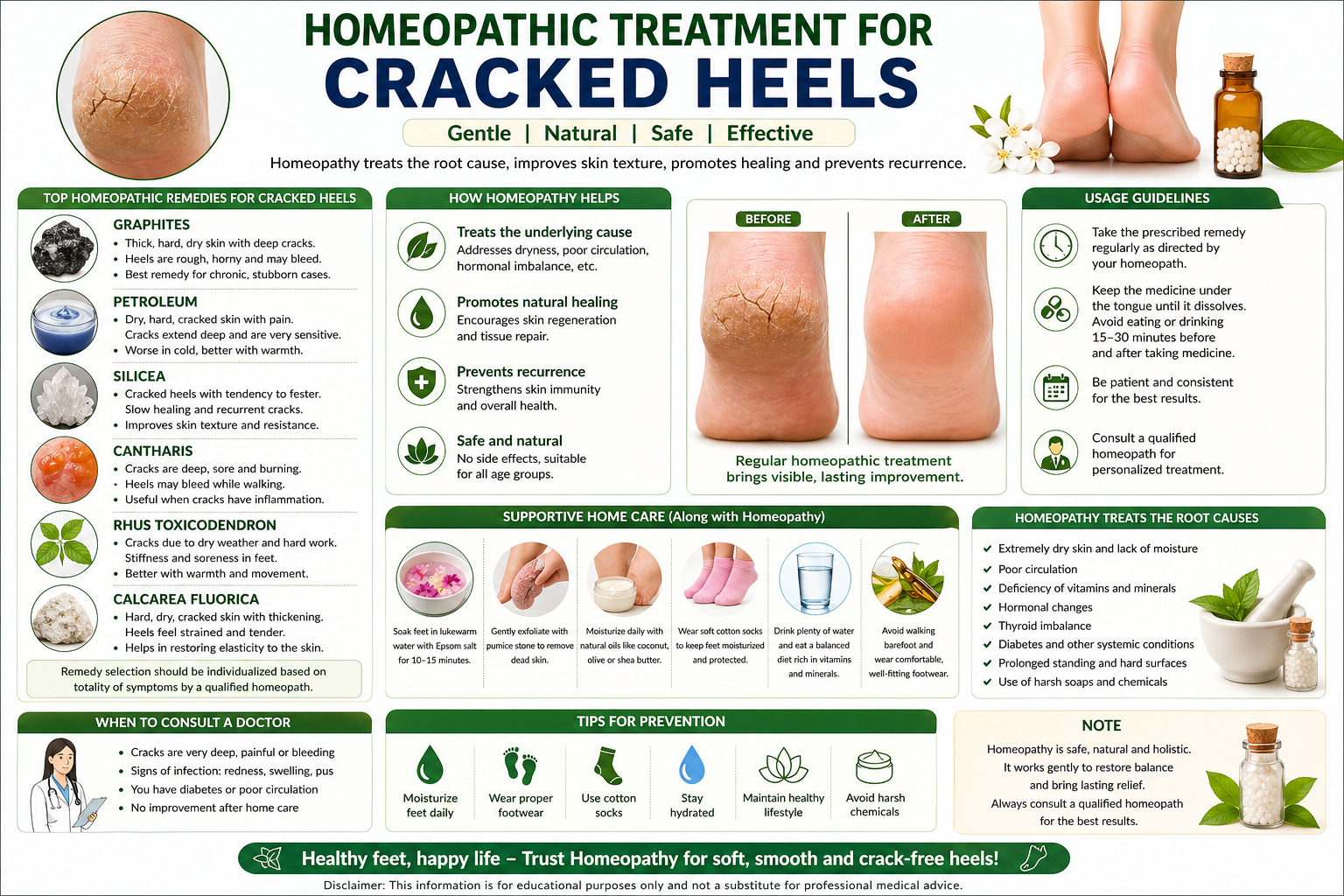
More details about homeopathic remedies for cracked heels
1. Graphites
Best for thick, rough skin with deep cracks and sticky discharge. Helpful when heels are hard and painful.
2. Petroleum
Useful for very dry, rough, bleeding cracks, especially in winter. Skin may feel sore and sensitive.
3. Sulphur
Recommended for burning, itching, and unhealthy skin with cracks. Useful when feet feel hot.
4. Calcarea Fluorica
Helpful for hard, cracked skin and deep fissures. Good for long-term dryness.
5. Silicea
Useful when cracks heal slowly and skin is weak or sensitive.
6. Antimonium Crudum
Best for thick, resilient skin and painful cracks on soles and heels.
7. Nitric Acid
Helpful for deep cracks with sharp pain or bleeding.
8. Lycopodium
Useful for dry skin with cracks, especially if digestion issues are also present.
9. Sepia
Recommended for dry, cracked heels in women with hormonal imbalance or weakness.
10. Arsenicum Album
Helpful for dry, burning, restless feet with painful cracks.
Final Words
So you now understand that cracked heels are more than just a cosmetic concern—they can signal underlying imbalances or prolonged exposure to dry, harsh conditions. You may have noticed symptoms like deep fissures, discomfort while walking, or even bleeding in severe cases, often worsened by factors such as dehydration, obesity, or wearing open-back footwear. These issues respond well when addressed holistically, especially with remedies tailored to your individual condition.
Homeopathy for cracked heels offers a personalized approach, focusing on both healing the skin and correcting internal tendencies. You might benefit from remedies like Silicea, known for supporting brittle skin and promoting healing in dry, cracked heels, or Graphites, often indicated when cracks are deep and accompanied by rawness. Another effective remedy for cracked heels is Petroleum, historically used in homeopathic practice for extremely dry, chapped skin that persists despite moisturizing.
You can manage this condition effectively by combining homeopathic treatment with proper foot hygiene, hydration, and protective footwear. Your consistent attention to both internal balance and external care makes all the difference in achieving lasting relief.
-
- Cause: They stem from dry skin (xerosis) and thick calluses, often worsened by open-back shoes, prolonged standing, or health conditions like diabetes and hypothyroidism.
- Symptoms: Besides visible cracks, they can cause pain, redness, itching, and in severe cases, bleeding or infection.
- Treatment: Regular moisturizing (especially with agents like urea or salicylic acid) and using a pumice stone to gently remove thickened skin are common treatments.
- When to see a doctor: If the fissures are bleeding, very painful, or show signs of infection (e.g., severe redness, pus), medical attention is necessary.
FAQ

Q: What causes cracked heels?
A: Cracked heels occur when the skin around the rim of the heel becomes dry, thick, and loses elasticity. Pressure from standing or walking pushes the fat pad under the heel outward, causing the skin to split. Common triggers include prolonged standing on hard floors, wearing open-back shoes or sandals, being overweight, and living in dry climates. Medical conditions like diabetes, hypothyroidism, and eczema also increase the risk.
Q: Can cracked heels be a sign of vitamin deficiency?
A: Yes, certain vitamin deficiencies may contribute to dry, cracked skin on the heels. Low levels of vitamin E, vitamin A, and some B vitamins—especially biotin (B7) and niacin (B3)—can impair skin health. Zinc deficiency is also linked to poor skin repair and dryness. While diet alone may not be the sole cause, correcting nutritional gaps can support healing when combined with proper foot care.
Q: What are the symptoms of deep cracks in heels?
A: Deep cracks in heels start as shallow lines but can turn into painful fissures that go deeper into the skin. Symptoms include rough, flaky skin; yellow or dark calloused areas; discomfort when walking; and, in severe cases, bleeding or infection. If cracks are deep enough to bleed or ooze, they require careful cleaning and protection to prevent bacterial entry.
Q: How do homeopathic treatments help with cracked, bleeding heels?
A: Homeopathic remedies aim to support the body’s natural healing process by addressing underlying imbalances. For cracked bleeding heels, remedies like Graphites, Silicea, and Petroleum are commonly used based on individual symptoms. Graphites may help when skin is thick, dry, and prone to splitting. Silicea is chosen for people with sweaty feet and slow-healing cracks. Petroleum is often used for deep, painful fissures that bleed and resist healing.
Q: Are there effective home remedies for dry feet and cracked heels?
A: Soaking your feet in warm water with Epsom salt for 15 to 20 minutes softens dead skin. After drying, apply natural moisturizers like shea butter, coconut oil, or olive oil and wear cotton socks overnight. Gently exfoliate with a pumice stone a few times a week to remove thickened skin. Avoid harsh soaps and always moisturize after showering. These steps can significantly improve dryness and prevent worsening cracks.
Q: How can I heal cracked heels permanently?
A: Lasting improvement comes from consistent care and addressing root causes. Wear supportive, closed-back footwear daily. Maintain a healthy weight to reduce pressure on heels. Use a foot cream with urea, lactic acid, or ceramides every day. Stay hydrated and eat a balanced diet rich in crucial fatty acids and vitamins. If cracks persist despite care, consult a healthcare provider to rule out systemic conditions like diabetes or fungal infection.
Q: What should I do for cracked heels that are bleeding?
A: Clean the area gently with mild soap and water, then pat dry. Apply an antiseptic ointment to prevent infection. Use a thick emollient like petroleum jelly and cover with a bandage or sock to protect the wound. Avoid walking barefoot or wearing irritating footwear. If bleeding continues, the crack is deep, or signs of infection appear, such as redness, swelling, or pus, seek medical advice promptly.
Cracked Heels Treatment in Philadelphia
Cracked heels are easy to treat and often go away with the proper environmental changes, but sporadic cases can cause complications. If home remedies don’t work after two weeks, consult a doctor. The doctor may recommend prescription medications such as creams and ointments.
The Philadelphia Homeopathic Clinic could be your best choice for a natural treatment for cracked heels. Our clinic is a subdivision of the Philadelphia Holistic Clinic, where all holistic techniques are available under one roof.
For an appointment for an initial evaluation, contact us at (267) 403-308585 or use our online scheduling application.