Oral Thrush
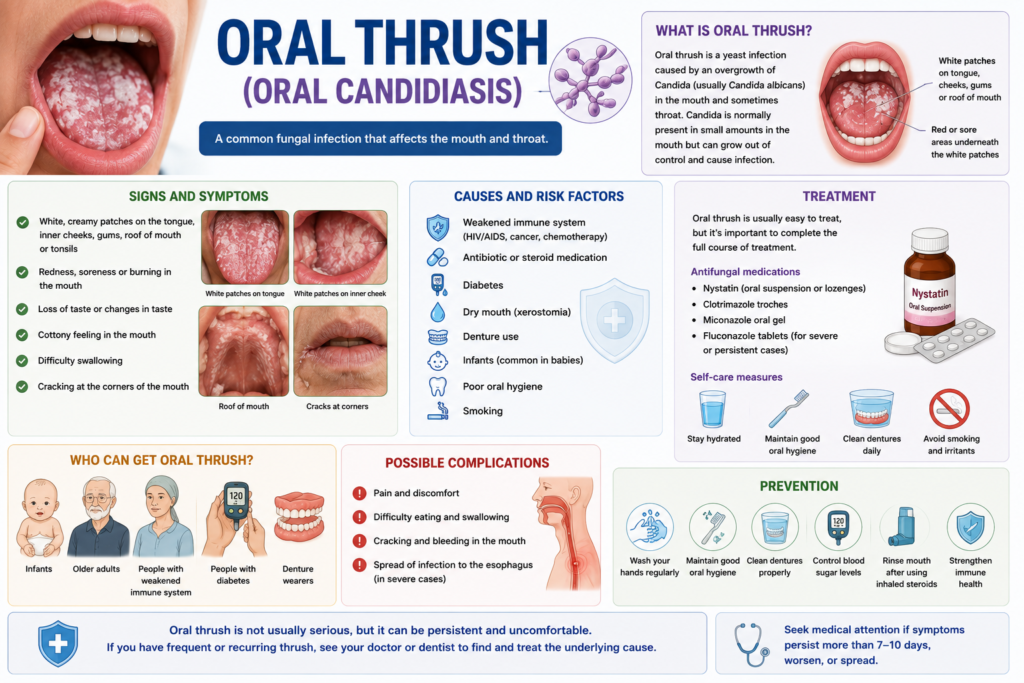
Oral thrush is a fungal infection of the mouth caused by an overgrowth of yeast called Candida. It leads to creamy white patches, soreness, and a burning feeling. The fungus Candida albicans accumulates in the mouth in oral thrush, also known as oral candidiasis (kan-dih-DIE-uh-sis). Candida is a type of yeast that naturally resides in the mouth. However, it can occasionally grow too much and result in symptoms.
Oral thrush causes creamy white patches or spots, typically on the tongue or inner cheeks. Oral thrush can occasionally spread to the tonsils, gums, roof of the mouth, or back of the throat.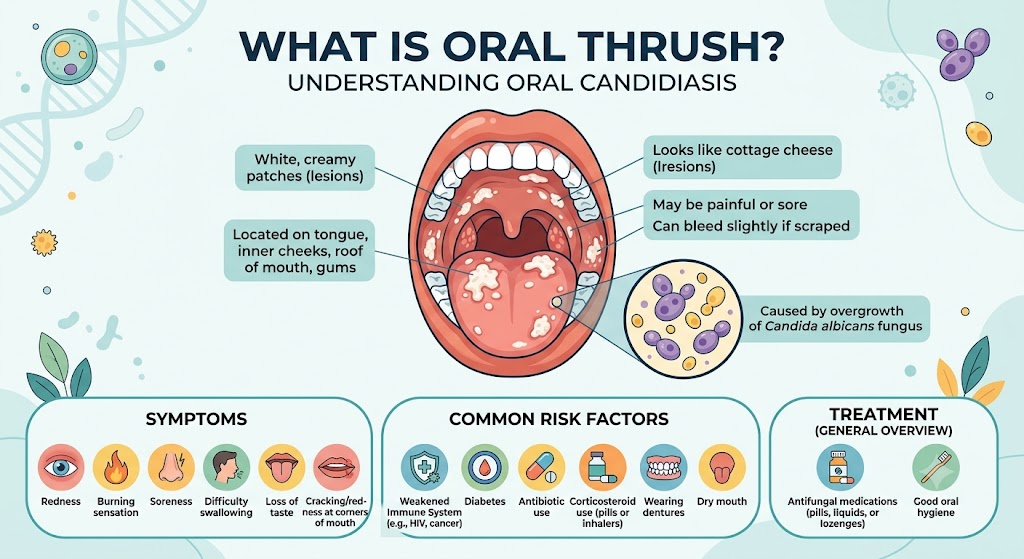
Oral thrush can strike anyone, but due to their weakened immune systems, infants and elderly people are more susceptible. Additionally, it is more likely to occur in people with compromised immune systems, certain medical problems, or certain medications. If you’re in good health, oral thrush is a minor issue. However, symptoms may be more severe and difficult to manage if your immune system is compromised.
- Creamy white patches or lesions on the tongue, inner cheeks, or throat
- Redness, burning, or soreness that can make eating or swallowing painful
- A cottony feeling in the mouth or a loss of taste
- Dryness or cracks at the corners of the mouth
- A weakened immune system from illnesses like HIV or cancer treatments
- Taking antibiotics or use of corticosteroid asthma inhalers, which upset the natural balance of microorganisms in the mouth
- Having high blood sugar levels from diabetes
- Being an infant or an older adult with lower immunity
Etiology and Transmission of Oral Thrush
Candida species, most commonly Candida albicans, are the microorganisms responsible for oral thrush in adults; an analysis of what causes oral thrush in adults and the clinical answer to whether oral thrush is contagious shows that overgrowth results from a displacement of normal oral flora or weakened local defenses, rather than mere exposure to the yeast.
Your recent treatments and medical status typically explain why that overgrowth occurs; if you take broad-spectrum antibiotics, use inhaled corticosteroids without rinsing, have poorly controlled diabetes, or receive chemotherapy you create an environment that favors Candida proliferation and symptomatic lesions.
Clinically, the answer to whether oral thrush is contagious is qualified: you can transfer Candida by direct contact or shared items, but transmission rarely produces disease in healthy adults, so clinicians classify typical adult thrush as not highly contagious among people with intact immunity.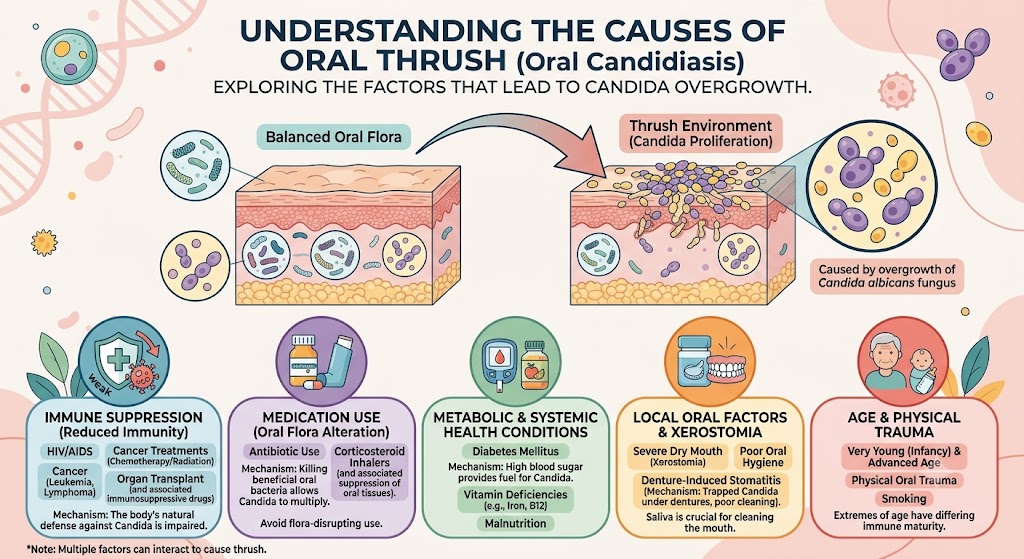
Primary risk factors and triggers
Medications that change the oral ecology are common triggers, with broad-spectrum antibiotics removing competing bacteria and inhaled corticosteroids leaving immunosuppressive residues in the mouth if you do not rinse after use; prolonged or repeated courses increase the likelihood of colonization.
Health conditions and behaviors also matter, including uncontrolled diabetes, HIV or other causes of immune suppression, chemotherapy, reduced saliva production, smoking, and poorly fitting dentures, all of which raise your baseline risk for symptomatic infection.
- Broad-spectrum antibiotic therapy
- Inhaled corticosteroid use without oral rinsing
- Uncontrolled diabetes and systemic immune suppression
- Poor denture hygiene or dentures worn overnight
- Xerostomia or salivary gland dysfunction
Any combination of these factors increases your odds of developing oral thrush and should prompt targeted preventive measures such as denture care and inhaler technique adjustments.
Understanding transmission and spread of oral thrush
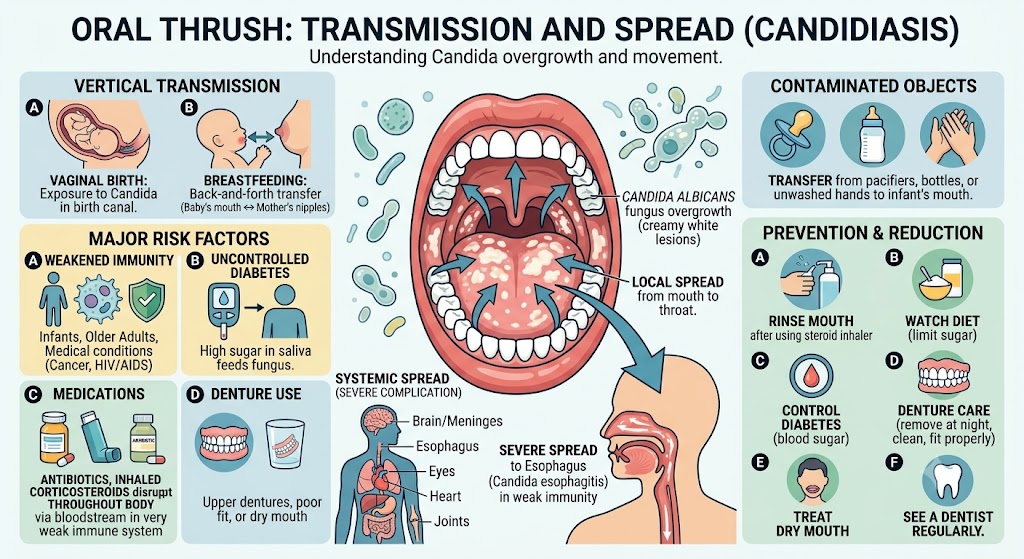
Candida spreads in oral thrush through direct mucosal contact or contaminated objects, but an analysis of what causes oral thrush in adults and the clinical answer to whether oral thrush is contagious shows that host susceptibility, not just exposure, determines whether colonization becomes disease.
Direct contact events you should be aware of include kissing and sharing utensils or toothbrushes, actions that can move yeast between mouths, though secondary cases among healthy adults are uncommon.
Household situations involving infants, elderly relatives, or immunocompromised partners deserve particular attention, so you should avoid sharing oral items and maintain strict denture and pacifier hygiene when someone in the home has lesions.
If you are caring for someone with thrush, practical precautions include laundering cloths, disinfecting dentures and feeding implements, improving oral hygiene for the affected person, and avoiding shared utensils until lesions resolve.
Identifying Oral Thrush Clinical Signs
Recognizing the variety of oral thrush symptoms for accurate diagnosis guides your clinical suspicion when presentations diverge, and you should note that lesions can mimic other conditions such as milk residue in infants or leukoplakia in smokers; an alert clinician in a mid-sized clinic will compare lesion behavior after gentle wiping to distinguish causes.
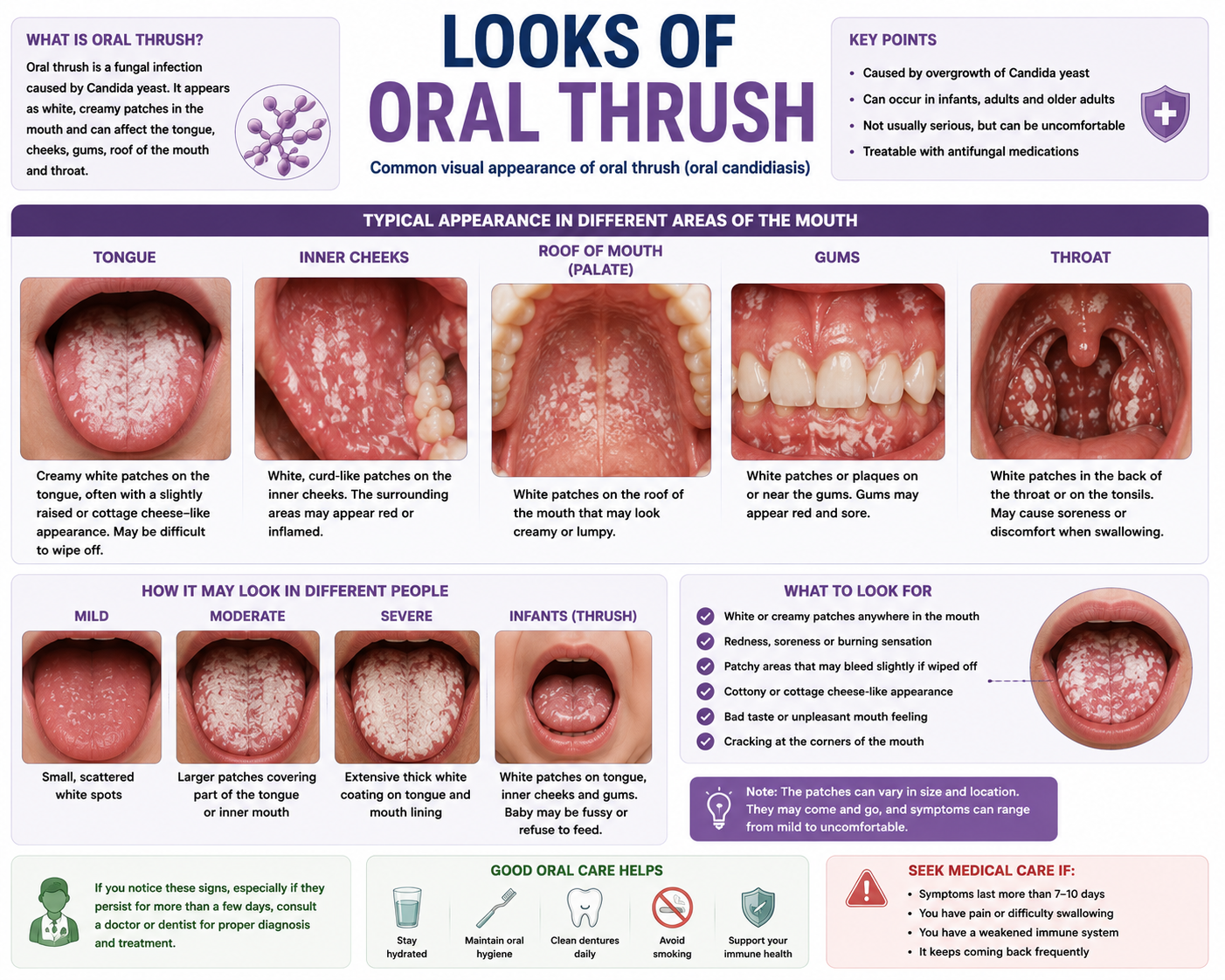
Clinical context sharpens interpretation because systemic contributors like recent broad-spectrum antibiotics, inhaled corticosteroid use, uncontrolled diabetes, or immunosuppression change the pretest probability, and you should document such exposures when a patient reports oral discomfort following a course of antibiotics.
Diagnosis relies on direct inspection, targeted sampling, and patterns of recurrence, so you may perform gentle scraping for KOH preparation or order fungal culture when lesions are persistent or recurrent, for example, after two rounds of topical therapy without improvement.
Visual indicators of oral thrush and lesions
White plaques often appear as curd-like, cottage-cheese deposits on the tongue and buccal mucosa that you can sometimes wipe away to reveal an erythematous base, a distinguishing sign in an infant brought to a pediatric clinic.
Distribution matters because candidal involvement commonly affects the dorsum of the tongue, inner cheeks, hard palate, and the mucosa beneath dentures, which you should inspect carefully in an elderly denture wearer experiencing chronic soreness under a prosthesis.
Severe or atypical presentations include hyperplastic candidiasis with firmly adherent plaques and angular cheilitis at the mouth corners, and you should suspect these when lesions resist gentle removal, as seen in long-standing cases among older adults.
Sensory changes and discomfort
Taste disturbance is a frequent sensory complaint, with you hearing descriptions of metallic, diminished, or altered flavor and a persistent cottony sensation that patients often report while eating acidic foods like citrus fruits.
Swallowing symptoms emerge when the infection extends posteriorly, producing sore throat, a sense of lumping, or intermittent dysphagia, so you should assess for odynophagia when a patient describes pain while swallowing solids or liquids.
Infants commonly present with feeding refusal and increased irritability alongside visible oral plaques, and you should correlate fussiness during feeds with the presence of white lesions on the palate or tongue.
Note that symptom clusters tied to recent inhaled steroid use, heavy antibiotic exposure, or immunosuppressive therapy strengthen the likelihood of candidiasis, so you should flag patients using high-dose inhaled corticosteroids for expedited evaluation.
Progression and Duration of Oral Thrush
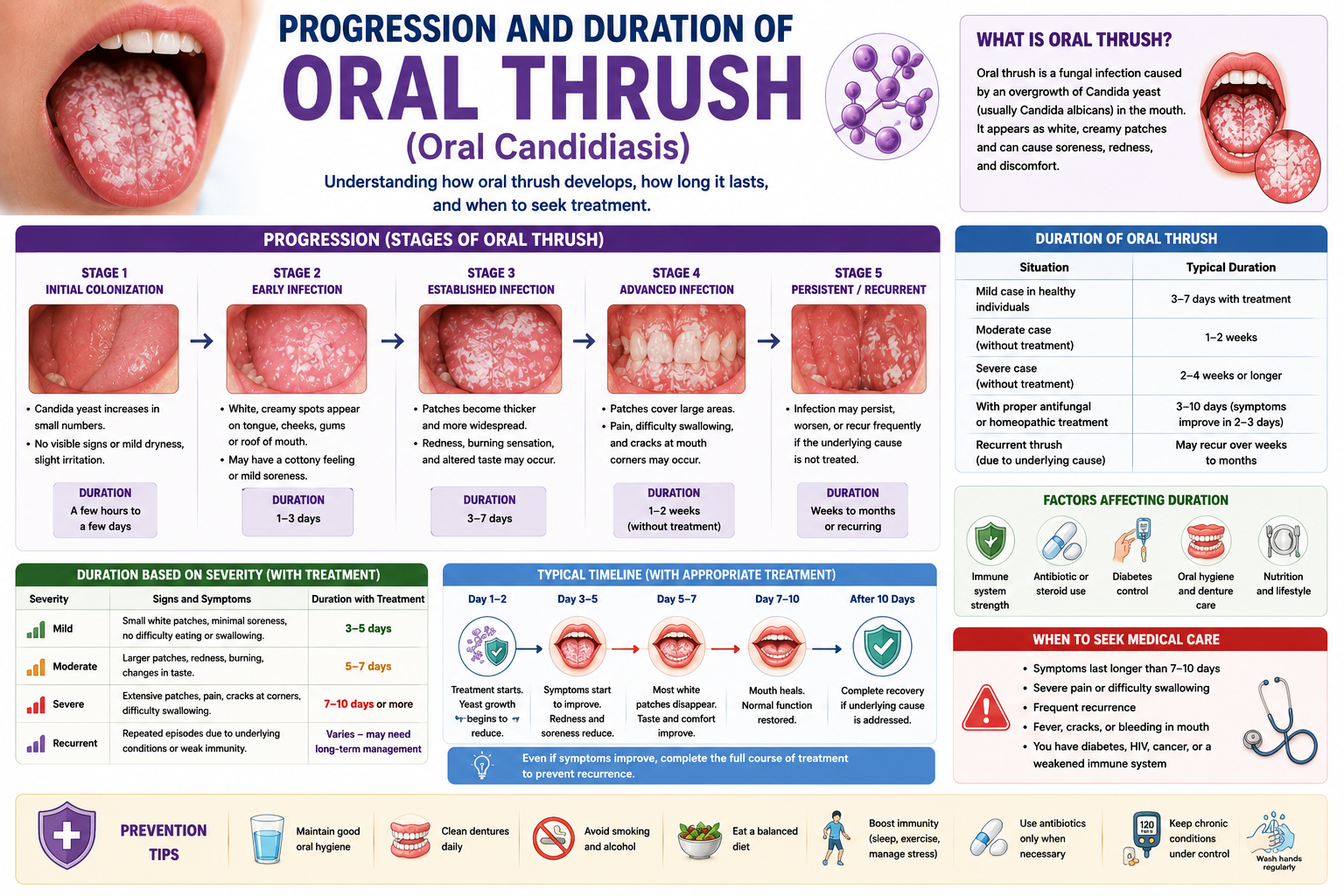
Natural history of the condition
Estimating how long oral thrush lasts without treatment depends on your immune status and local factors; determining how long oral thrush lasts without treatment and the risks of a persistent infection is often the first question clinicians answer for patients, and symptoms in healthy adults commonly persist for several days to weeks without intervention.
Immune suppression alters the timeline significantly, so if you have uncontrolled diabetes, are taking broad-spectrum antibiotics, or use inhaled corticosteroids without rinsing, lesions may fail to resolve and can recur after initial improvement.
Expect symptom evolution to begin with white, curd-like plaques that may be scraped, followed by soreness and taste changes, and if left unchecked in high-risk patients, the infection can extend to the esophagus, causing painful swallowing.
Complications of delayed care for oral thrush
Persistent oral thrush can progress beyond the mouth, so if you ignore ongoing symptoms the fungus may cause esophageal candidiasis, which presents as odynophagia and requires systemic antifungal therapy.
Recurrent episodes are common when local drivers remain unaddressed, so if you wear poorly fitting dentures or have chronic xerostomia, you may develop denture-associated candidiasis that necessitates both topical treatment and denture hygiene adjustments.
Systemic spread is a concern primarily for severely immunocompromised people, so if you are undergoing chemotherapy, are an organ transplant recipient, or have advanced HIV disease, untreated oral thrush could be a precursor to candidemia requiring inpatient care.
Seek prompt evaluation if you experience worsening pain, fever, difficulty swallowing, weight loss, or if an infant refuses feeds; for most adults persistent symptoms beyond several days merit clinical assessment and, when indicated, initiation of appropriate antifungal therapy.
Natural and Fast-Acting Home Remedies

Dietary and acidic interventions
Start by reducing dietary sugars and refined carbohydrates, since you will feed Candida when you consume them, and cutting those foods shortens the conditions that favor overgrowth; you should focus on plain, unsweetened probiotic foods such as natural yogurt or kefir to help rebalance oral flora, and you can pair those with a gentle acidic rinse like apple cider vinegar diluted in water, taking care not to ingest the rinse and to stop if you feel mucosal burning, for example by swishing a small, diluted solution briefly twice daily until lesions show improvement.
Reduce intake of highly acidic drinks that can irritate raw oral tissue, such as citrus juices and sodas, because irritated mucosa delays healing; you will get faster symptomatic relief if you substitute lukewarm water, herbal teas, or plain broths and maintain steady hydration to support saliva flow, and you might add a daily serving of unsweetened probiotic yogurt or a clinician-recommended probiotic supplement to help restore microbial balance.
Include apple cider vinegar for oral thrush cautiously as an adjunct rather than a sole cure, since the anecdotal mechanism is creating an unfavorable surface environment for yeast; you should always dilute ACV before use, avoid swallowing the rinse, and combine it with other home measures such as saltwater rinses, reduced sugar intake, and short-duration coconut oil pulling, for example by using the diluted vinegar rinse plus probiotics and saline rinses over several days to seek faster symptom relief.
Holistic oral hygiene practices
Rinse with warm saline frequently, as a simple saltwater rinse helps soothe inflamed tissue and mechanically reduces surface organisms; dissolve a modest amount of salt in warm water and swish gently after meals and before bed, avoiding vigorous gargling that can irritate, to support mucosal recovery and reduce visible white patches over several days.
Brush with a soft-bristled toothbrush and include gentle tongue cleaning, since mechanical removal of biofilm lowers microbial load and speeds symptom improvement; you will benefit from using a new brush once signs begin to clear, avoiding alcohol-based mouthwashes that can worsen dryness, and applying gentle circular strokes along the gums and tongue once or twice daily to dislodge residues.
Replace or disinfect removable dental appliances promptly because dentures, retainers, and night guards can harbor Candida and serve as reservoirs for reinfection; you should remove these items while sleeping, soak them in an appropriate disinfecting solution overnight, and avoid re-inserting unclean devices the next morning to minimize recurrence risk.
Monitor your progress closely when you apply holistic oral hygiene practices, combining appliance care, gentle brushing, tongue cleaning, and regular rinses while noting any spread of lesions or increasing soreness; you should contact a clinician if symptoms worsen or if you develop systemic signs such as fever or difficulty swallowing, and seek evaluation when home measures have not produced clear improvement after several days.
Homeopathic Approaches to Oral Thrush Treatment
The methodology of homeopathy for oral thrush and the selection of specific homeopathic remedies for oral thrush rest on individualized case-taking and the law of similars, with you and a practitioner mapping the full symptom picture before remedy choice. You should expect an assessment that covers lesion appearance, taste changes, associated throat or gum soreness, and contributing factors such as recent antibiotic courses or inhaled corticosteroid use. Many homeopaths document a treatment plan that specifies remedy name, potency and a follow-up window, for example selecting an initial potency and reassessing within 48 to 72 hours to judge response.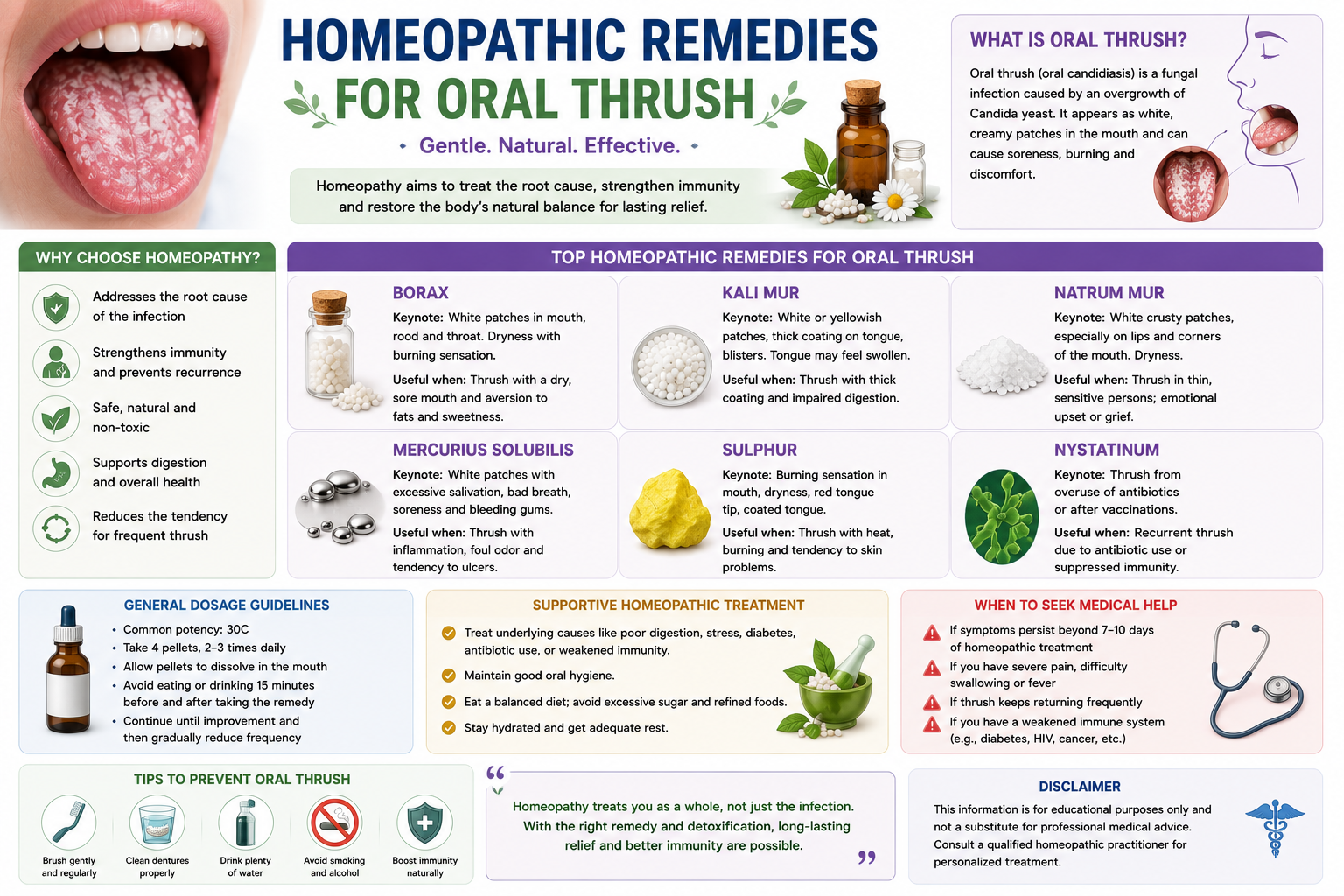
You will notice the selection of specific homeopathic remedies for oral thrush is symptom-driven rather than diagnosis-driven, so remedies are chosen to match the totality of signs and modalities. In practice, common options include Borax, Mercurius Solubilis, Pulsatilla, Natrum muriaticum, Sulphur and Hepar Sulphur, each associated with distinct oral symptom pictures and accompanying systemic features. A clear record of timing, triggers, and coexisting conditions informs whether a low-potency such as 6C or a higher-potency such as 30C is selected initially.
Dosing and follow-up decisions are part of the methodology, so you should expect guidance on frequency and potency adjustments based on clinical change. Clinicians often recommend more frequent repetition with 6C for intense acute discomfort, while 30C may be given as a single dose and then re-evaluated, with higher potencies reserved for persistent patterns. If you are immunocompromised, an infant, or symptoms escalate with fever or feeding difficulty, conventional antifungal assessment is advised alongside any homeopathic plan.
Individualized symptom mapping
Individualized symptom mapping begins with a detailed oral inspection and targeted questioning so you and the practitioner capture lesion location, appearance, and whether plaques scrape away, which helps distinguish thrush from other lesions. You will be asked about taste alterations, burning versus raw sensations, tendency to drool, and whether pain interferes with feeding in infants, all recorded as part of the remedy-selection matrix. A timeline that links onset to events such as a recent antibiotic course, oral steroid inhaler use, denture wear, or an intercurrent illness is documented during mapping.
Detailed systemic and lifestyle factors are incorporated into the symptom map so you receive a remedy that reflects the whole person, not just the mouth findings. You should report medications, glycemic control if diabetic, smoking or oral hygiene practices, and any family history of recurrent candidiasis, because those variables steer the choice between acute symptomatic remedies and longer-term constitutional prescriptions. Practitioners often use a checklist format to ensure no relevant trigger or modality is missed during the first visit.
Matching mapped symptoms to homeopathic repertory rubrics is the next step, so you will see specific remedy indications tied to your recorded signs and sensations. For instance, a remedy selected for a thrush case with burning pain that improves with cool drinks will differ from one chosen for thick, adherent white plaques with a tendency to recur after antibiotics. The mapping process therefore yields a focused shortlist of candidate remedies that correspond to your precise symptom set.
Common homeopathic preparations for oral thrush
Common homeopathic remedies for oral thrush include Borax for raw, sore mouths with drooling, Mercurius solubilis for ulceration and excessive salivation, Pulsatilla for mild, changeable oral symptoms with bland discharge, Natrum muriaticum for thrush after antibiotics, Sulphur for chronic burning and redness, and Hepar sulphuris for extremely painful, suppurative lesions. You should understand these are illustrative remedy-picture pairings used in selection rather than guaranteed outcomes.
Preparation forms are typically oral pellets or liquid dilutions, which you will place under the tongue to dissolve, and some practitioners may advise topical applications of a highly diluted preparation for localized comfort in infants. You will be instructed on whether to avoid strong flavors, mint, or teeth brushing immediately before dosing to prevent interference with remedy uptake, and on storage away from strong electromagnetic sources or heat. Many clinicians prefer sucrose-based pellets for ease of use in pediatric cases.
Selection of potency and repetition schedule is tailored to acuity and patient sensitivity, so you will often receive a low potency, such as 6C, for repeated dosing several times daily during acute flare-ups, while a 30C potency might be given once with reassessment. In infants or pregnant people, practitioners generally recommend lower potencies and gentler repetition to reduce the chance of aggravation. If you respond within the first 48 to 72 hours, the regimen is usually tapered; lack of change prompts re-evaluation of the remedy picture and potency.
Follow-up protocols emphasize safety and clear endpoints, so you should expect instructions on when to stop the remedy, how to document symptom change, and red flags that require conventional medical review, for example progressive fever, poor feeding in infants, widespread mucosal involvement, or persistence beyond a short reassessment period. Most homeopaths schedule a check at 48 to 72 hours for acute cases and a longer review for chronic patterns, ensuring you have a concrete timeline for monitoring progress.
Summing up
An integrated approach combines targeted medical therapy with supportive measures. You will often require prescription topical antifungals for mucosal plaques, with escalation to systemic azoles such as fluconazole when lesions are extensive or persistent.
Daily oral hygiene, specific dietary adjustments that reduce fermentable sugars, and proper denture care address local contributors to recurrence. If you add simple adjuncts at home, a gentle saltwater rinse twice daily and appropriate probiotic-containing foods are practical options.
Homeopathic remedies are individualized by a trained practitioner and can complement conventional care rather than replace it. You should consult a clinician before relying on homeopathy if you are immunocompromised or treating an infant, and you should seek medical review for persistent lesions or feeding difficulties.
FAQ

Q: Is oral thrush contagious?
A: Candida species that cause thrush are common mouth and gut commensals, and spread can occur through direct contact such as kissing or sharing utensils; transmission is most likely when local or systemic defenses are weakened. Infants can acquire oral thrush from a caregiver during breastfeeding, and close contact between partners can transfer yeast to intact mucosa without immediate symptoms. People who handle dentures or pacifiers without regular disinfection can pass yeast between users, for example, a pacifier used by multiple infants.
Q: What typically causes oral thrush in adults?
A: Disruption of the normal oral microbiome and immune suppression are common triggers, with broad-spectrum antibiotics and uncontrolled diabetes frequently implicated because they reduce bacterial competitors or impair immunity. Use of immunosuppressive medication or therapies, nutritional deficiencies, and heavy tobacco use also increase susceptibility. A typical case involves an adult on a recent antibiotic course who then develops white tongue plaques after the drug regimen.
Q: What symptoms should prompt evaluation for thrush?
A: Characteristic signs include creamy white, cottage-cheese-like patches on the tongue or inner cheeks that may rub off to reveal a red sore surface, along with oral burning or a metallic taste. Local extensions can cause angular cheilitis at the mouth corners or, rarely, esophageal discomfort when swallowing becomes painful. A patient presenting with persistent white plaques and a new loss of taste would warrant clinical assessment.
Q: How long does oral thrush last if left untreated?
A: Duration varies with host status, often resolving within a short period in healthy adults but persisting in those with immune compromise, poor glycemic control, or untreated local factors. Chronic or recurrent cases tied to an unresolved predisposing issue can last for weeks or longer until that trigger is addressed. An elderly individual with untreated poor glycemic control may experience ongoing symptoms for weeks to months without intervention.
Q: What over-the-counter or prescription treatments are used?
A: Topical antifungal options include miconazole oral gel and clotrimazole troches in regions where they are available without prescription, and nystatin oral suspension is frequently used where prescribed; these act locally on the mucosa. Systemic azole antifungals such as fluconazole are reserved for severe, extensive, or esophageal involvement and require clinician supervision. For example, a patient with suspected esophageal candidiasis will generally receive an oral systemic antifungal prescribed by their physician.
Q: How can I try to get rid of oral thrush quickly at home?
A: Practical self-care measures can reduce yeast load and support recovery, including rinsing with warm saline, maintaining strict denture hygiene, reducing added sugars in the diet, and replacing an old toothbrush after active infection. Probiotic approaches such as plain unsweetened yogurt or probiotic capsules are commonly used alongside hygiene measures, while alcohol-based mouthwashes should be avoided because they can irritate mucosa. Some people try diluted apple cider vinegar as a rinse, but it should be used cautiously and never undiluted because it can burn sensitive oral tissues.
Q: Are there homeopathic remedies for oral thrush, and are they effective?
A: Homeopathy is used by some practitioners to address symptom patterns, with remedies commonly mentioned in practice including Borax for infantile white patches, Mercurius for excessive salivation and foul breath, and Natrum muriaticum for angular cracking; remedies are typically chosen to match the individual symptom profile. High-quality clinical trial data supports homeopathy for candidal infections. However, medical evaluation is advised when swallowing difficulty, fever, or systemic signs are present. A person seeking adjunctive homeopathic care should do so through a licensed practitioner while continuing to consult their primary clinician for antifungal management when needed. Remember, a homeopathic practitioner is first of all a medical doctor.
When should I seek professional help for oral thrush?
It is advisable to seek professional medical assistance if you experience severe or persistent ulcers, recurrent outbreaks that interfere with daily activities, signs of infection such as fever or swollen glands, or if the ulcers do not heal within two weeks despite home care and remedies.
At Philadelphia Homeopathic Clinic, internationally recognized homeopaths, doctor Tsan, and associates deliver natural treatment for the main cause of aphthous stomatitis.

Contact our clinic at (267) 403-3085 to schedule the initial homeopathic evaluation.