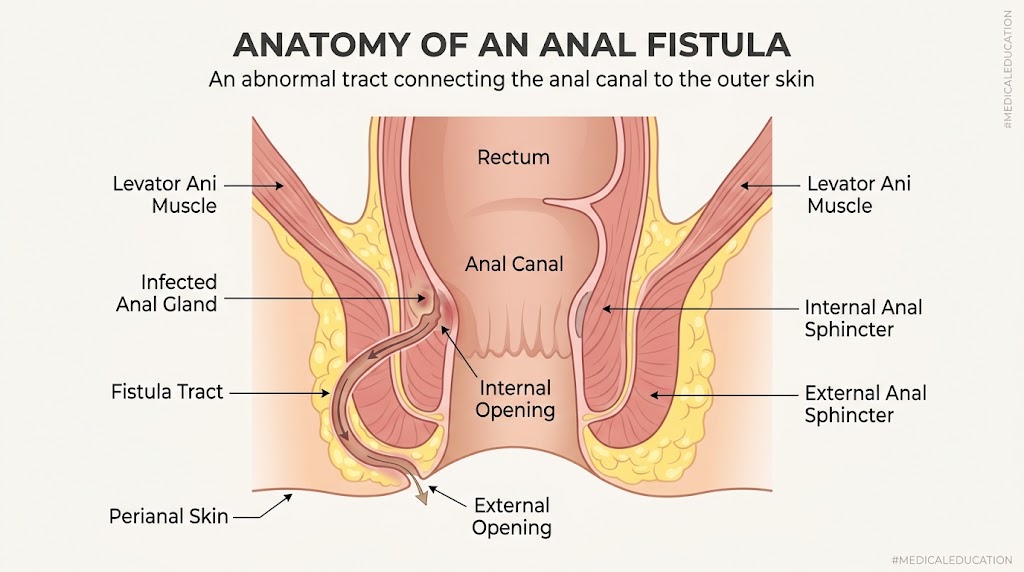
Anal Fistula
An anal fistula is an abnormal passage connecting the anal canal to the skin near the anus, often developing after an infection forms an abscess. If you notice persistent drainage or discomfort around the anus, the cause may be more than surface irritation: the tract can remain after an abscess has drained, either on its own or with treatment.
Your symptoms may include pain, swelling, skin irritation, or discharge of pus or blood from an opening near the anus. Symptoms can fluctuate, and an external opening may close while infection continues inside. Because fistulas differ in their route and relationship to the anal sphincter muscles, a clinician’s assessment matters before you try home or holistic care.
Holistic measures, such as warm sitz baths and gentle hygiene, can ease discomfort but do not close a fistula tract. Medical evaluation guides treatment and helps protect sphincter function. For a clinical overview, see this Guide to Anal Fistula, which describes the condition and its care.
Key Takeaways:
- An anal fistula is an abnormal tunnel between the anal canal and the skin near the anus, most often following an infection and abscess in an anal gland.
- Common symptoms include persistent or recurrent drainage, irritation, pain, swelling, and a small opening near the anus. Fever or worsening pain can signal an active infection.
- A clinician diagnoses a fistula through examination and, when needed, imaging such as MRI or endoanal ultrasound to map the tract and its relation to the anal sphincter.
- Treatment usually requires a medical procedure, such as fistulotomy for selected simple fistulas or a seton for some complex tracts. The choice depends on the fistula’s course and the risk to bowel control.
- Sitz baths, gentle cleaning, adequate fluids, and fiber-rich foods can ease irritation and support bowel comfort, but they do not close the fistula tract or replace clinical care.
- Acupuncture and homeopathic remedies have not been established as cures for anal fistulas. Products taken by mouth or applied to the area should not delay assessment or prescribed treatment.
- Recurrence risk depends partly on the fistula’s complexity and underlying conditions, including Crohn’s disease. Follow-up with a colorectal surgeon is used to monitor healing and persistent drainage.
Understanding Anal Fistula
Recognizing the structure of an anal fistula gives you a clearer framework for understanding why symptoms can persist and why treatment depends on the tract’s course. The condition involves a connection between the anal canal and the skin near the anus, rather than a surface irritation alone. Its internal opening and external opening define the route that clinicians assess. 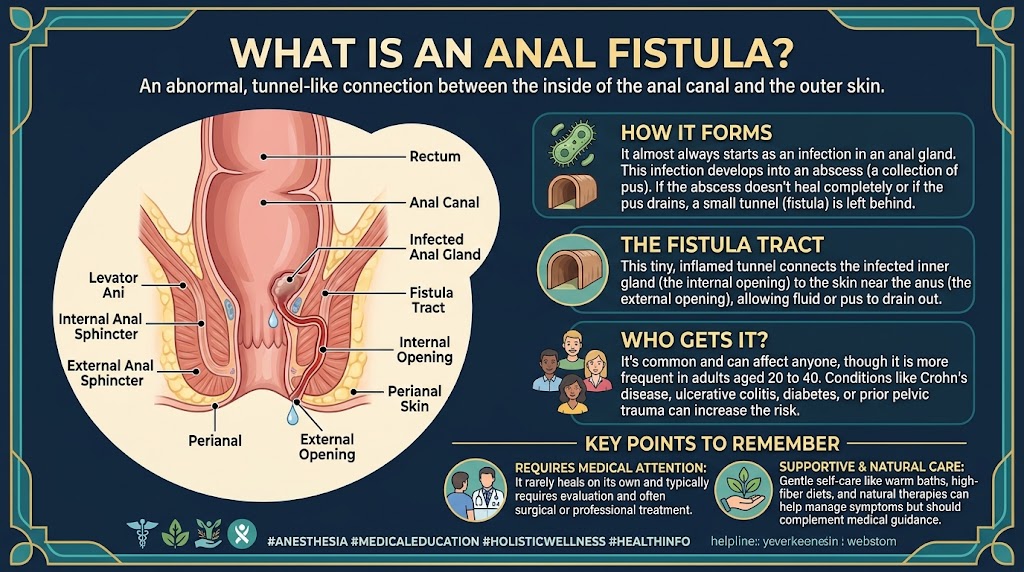
As you learn the terminology, distinguish a fistula from an abscess: an abscess is a collection of infection, while a fistula is an abnormal passage that can remain after an abscess drains. The two conditions are often related, but they are not interchangeable. A clinician’s examination focuses on the opening, drainage, and the tract’s relationship to the anal sphincter muscles.
Understanding that anatomy also explains why a fistula needs medical assessment rather than self-treatment alone. The passage may cross or involve sphincter muscles, which affects continence and influences the choice of care. Your symptoms and the tract’s position provide different pieces of information, so a specialist may use an examination or imaging to map its path before recommending treatment.
Definition and overview
An anal fistula is an abnormal tunnel connecting the inside of the anal canal or rectum with the skin near the anus. You may notice its external opening as a small spot that releases pus, blood, or fluid. The tunnel is usually lined with inflamed tissue and does not behave like a temporary cut that closes once the surface heals.
Many fistulas develop after an anal gland becomes infected and an abscess forms. When that abscess drains, a channel can remain between the original infection site and the skin. Your clinician describes the fistula by its route, including whether it passes through or around the sphincter muscles, because those muscles control bowel continence and are central to treatment planning.
Fistulas vary in complexity: a simple tract has a more direct course, while a complex one may branch or involve more sphincter muscle. You may have ongoing drainage, irritation, or repeated episodes of swelling, but symptoms alone do not show the full anatomy. Examination, and sometimes imaging, helps identify the internal opening and map the tract before care is selected.
- The external opening may close temporarily while the tract remains.
- Drainage can soil underwear and irritate nearby skin.
- Fistula pathways are classified by their relation to sphincter muscles.
Anal Fistula Causes and Risk Factors
Your risk partly depends on what happens in the anal glands, small glands near the opening of the anus that release fluid into the anal canal. A blockage can trap bacteria and lead to an abscess, a pocket of infection. If the abscess drains through the skin but its internal channel remains, that passage may develop into a fistula. The sequence often begins with infection in one of these glands.
Medical history also matters because some conditions inflame or damage tissue around the anus. Crohn’s disease, a form of inflammatory bowel disease, is a recognized cause, and an anal fistula can occur alongside other symptoms affecting your digestive tract. Previous surgery or injury in the anal area can also create a route between the anal canal and skin, although the specific cause is not always identifiable.
Understanding the cause is relevant to treatment because a fistula linked to Crohn’s disease may need a different plan from one that follows a local abscess. Your clinician will ask about prior infections, bowel symptoms, and procedures, then examine the area to assess the tract. These details help distinguish a gland-related infection from an underlying inflammatory condition or tissue injury.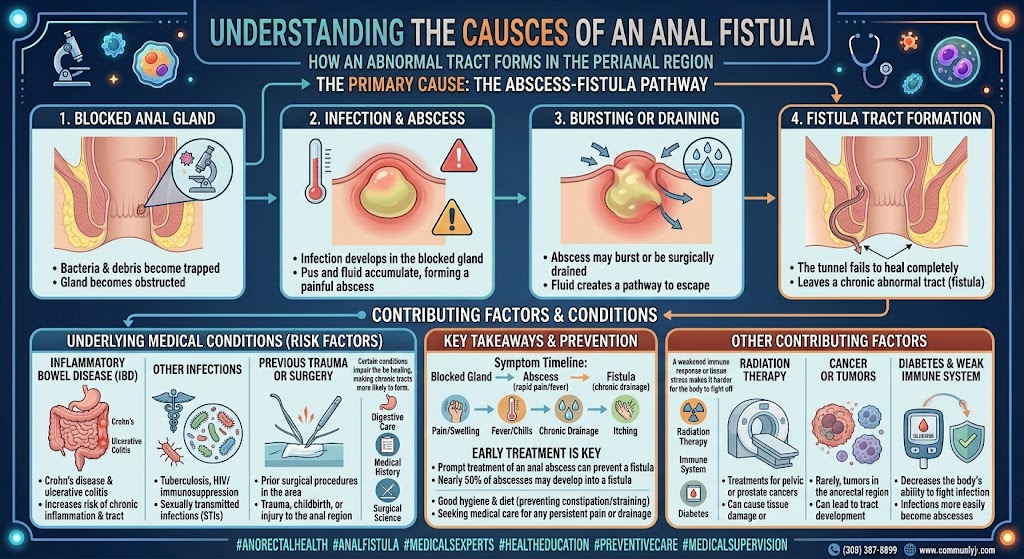
Common causes
Most anal fistulas begin with an infection of an anal gland. When the gland becomes blocked, bacteria can multiply and form an abscess; after the abscess drains, a tunnel may persist between the anal canal and nearby skin. This gland-related pathway is the common cause. Crohn’s disease, prior anal surgery, and injury to the area are other recognized causes, while some fistulas have no clear cause.
| Cause | How it relates to a fistula |
|---|---|
| Blocked anal gland | Infection can form an abscess and leave a persistent tract after drainage. |
| Crohn’s disease | Inflammation can affect tissue around the anus and contribute to fistula formation. |
| Prior surgery or injury | Damage in the anal area can create an abnormal passage. |
Symptoms of Anal Fistula and Diagnosis
As you assess changes around the anus, note whether discomfort is constant or linked to bowel movements. An anal fistula often causes pain, irritation, and drainage from an opening near the anus; the fluid may contain pus or blood. You might also notice a small opening or a tender area of skin, while the amount of drainage can vary.
Persistent discharge can keep the surrounding skin sore, itchy, or inflamed. Some people develop swelling that becomes more painful when an abscess forms, and fever or feeling unwell can accompany an infection. Record when symptoms occur, whether drainage is continuous, and any episodes of swelling, because these details help your clinician understand the pattern.
Diagnosis usually begins with a review of your symptoms and a physical examination of the area. Your clinician may gently inspect the external opening and assess tenderness or drainage; further examination or imaging may be needed to identify the fistula’s path, particularly if it is not visible at the skin. Seek prompt medical care for worsening pain, fever, or rapidly increasing swelling.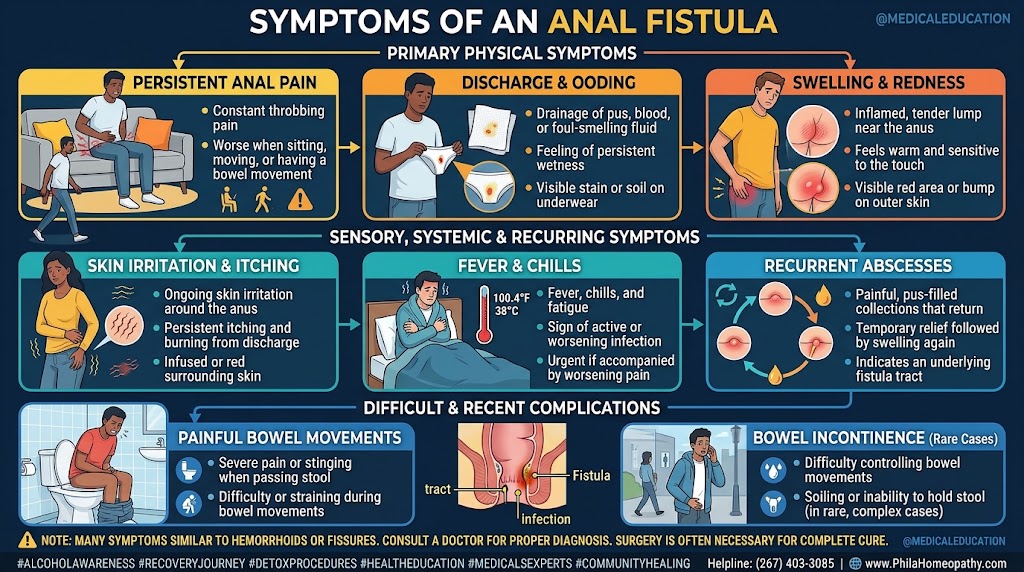
Signs and symptoms
- Drainage of pus or blood near the anus
- A small opening in the skin beside the anus
- Persistent soreness, irritation, or itching
- Swelling and increasing pain if an abscess develops
- Fever or feeling unwell with infection
Medical Treatments and Surgery for Anal Fistula
Your treatment plan depends on the fistula’s route, its relationship to the anal sphincter muscles, and whether an abscess or underlying condition such as Crohn’s disease is present. A colorectal surgeon usually assesses these factors before recommending a procedure, because cutting through too much sphincter muscle can impair bowel control. Examination under anesthesia, sometimes with imaging, can clarify the tract’s course and guide the choice of treatment.
For a fistula associated with an active abscess, drainage comes first; antibiotics alone do not close the tract or replace drainage. Your clinician may prescribe antibiotics when infection has spread into surrounding tissue or when specific medical conditions increase infection risk. Treatment often aims to clear infection, preserve sphincter function, and manage the internal opening, with follow-up tailored to your symptoms and healing.
Some fistulas need more than one procedure, particularly when the tract crosses a substantial portion of the sphincter or branches into complex paths. A seton, a thread or silicone loop placed through the tract, can keep it draining while inflammation settles or serve as part of staged treatment. Your surgeon explains expected wound care, possible recurrence, and changes in continence risk before surgery.
Treatment options
For a simple, low fistula, your surgeon may recommend a fistulotomy, which opens the tract along its length so it can heal from the base outward. The procedure is generally suited to fistulas involving little sphincter muscle; suitability depends on your anatomy and continence history. Your care team will explain how to keep the open wound clean and what healing checks are needed.
Seton placement is commonly used when a fistula involves more sphincter muscle or needs staged management. A loose seton maintains drainage and limits premature closure over an infected cavity, while a cutting seton is tightened over time in selected cases and carries a risk of continence effects. Your surgeon will specify which type is proposed and how often it needs review.
Other sphincter-preserving options include an advancement flap, which covers the internal opening with tissue, and LIFT, short for ligation of the intersphincteric fistula tract. Fibrin glue or a bioprosthetic plug may also be discussed, though results vary and these methods are not suitable for every tract. For Crohn’s-related fistulas, your gastroenterologist may coordinate medication, including biologic therapy, with surgical drainage.
| Option | Typical use | Main consideration |
|---|---|---|
| Fistulotomy | Simple, low-tract | Sphincter involvement |
| Loose seton | Drainage or staged care | Ongoing follow-up |
| Advancement flap or LIFT | Selected complex tracts | Preserving sphincter function |
| Glue or plug | Selected cases | Variable closure results |
Surgical care
Before surgery, your team reviews your medications, medical conditions, and the planned anesthetic. You may have an examination under anesthesia, allowing the surgeon to map the opening and tract without discomfort. If an abscess is present, the surgeon drains it; a seton may be inserted during the same procedure when immediate fistula division would risk excessive sphincter injury.
After the operation, follow the wound-care instructions provided by your surgical team. Warm sitz baths, gentle rinsing after bowel movements, and absorbent gauze are often used for an open fistulotomy wound. Your clinician may recommend stool-softening measures to reduce straining, while pain relief is selected according to your health history and other medicines.
Healing time varies with the procedure, tract complexity, and whether infection persists. Attend scheduled reviews so your surgeon can assess drainage, wound closure, and seton position, and contact the care team promptly for fever, worsening pain, heavy bleeding, or increasing swelling. Report new difficulty controlling gas or stool as well, since continence changes require clinical assessment.
Holistic and Home Treatments for Anal Fistula
Supportive care can ease irritation and make daily hygiene more comfortable, but it cannot close an anal fistula or replace assessment by a colorectal specialist. A fistula is an abnormal tract, and persistent drainage or infection requires medical attention. Treat home measures as comfort care alongside the treatment plan you have discussed with your clinician, not as a natural cure.
Claims about natural treatment for anal fistula, home remedies, acupuncture, and homeopathic medicine vary widely in reliability. No homeopathic remedy or acupuncture technique has been shown to eliminate the tract. Tell your clinician about supplements, remedies, or other therapies you use, especially before a procedure or while taking prescribed medicines.
Seek prompt care if you develop fever, worsening pain, spreading redness, or increasing swelling, as these can signal an abscess or infection. Gentle routines are generally safer than inserting products into the opening or applying harsh substances to the skin. The sections below distinguish practical comfort measures from therapies that should not be mistaken for definitive fistula treatment.
Natural and home-based approaches
Warm sitz baths can soothe the area and clean the skin after a bowel movement. Sit in plain, comfortably warm water for several minutes, then pat the area dry with a soft towel rather than rubbing. Avoid adding antiseptics, essential oils, or salts unless your clinician recommends them, since irritated skin can become more painful.
Keeping stools soft can reduce straining and discomfort, though it does not heal the fistula. Drink fluids according to your health needs, eat fiber-rich foods such as vegetables, fruit, and oats, and ask a clinician or pharmacist before using a stool softener. If you have a condition that limits fluids or fiber, follow the dietary guidance you have already been given.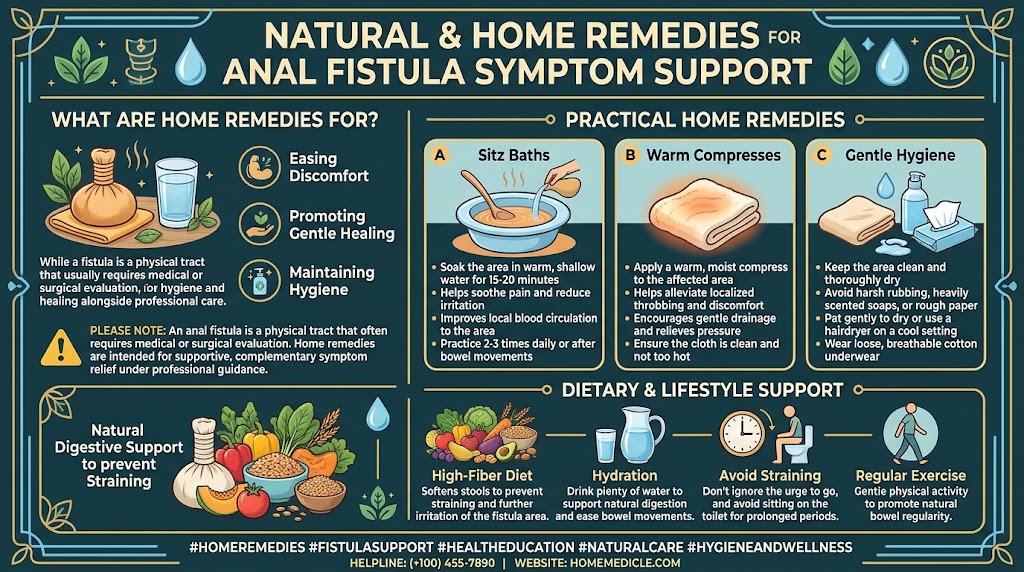
For day-to-day care, wear breathable underwear, changing it whenever drainage soils the fabric. A small, clean gauze pad placed externally can absorb discharge; do not pack gauze into the tract. Wash hands before and after changing the pad, and avoid squeezing or probing the opening. Keep a note of changes in drainage, pain, or swelling to share at your appointment.
- Use unscented soap on surrounding skin.
- Dispose of used gauze in household waste.
- Do not apply caustic or irritating substances.
Acupuncture and homeopathy for Anal Fistula
Acupuncture for fistula is sometimes sought for pain or general comfort, but it does not close an anal fistula or drain an abscess. If you choose acupuncture, tell the practitioner about your diagnosis, any active infection, and planned surgery. Ask that needles be placed away from the fistula and use a properly trained practitioner who follows standard infection-control practices.
Homeopathic Medicine for Anal Fistula
Homeopathic medicine for anal fistula is supported as a method of curing the tract. Products marketed as homeopathic remedies may be highly diluted, and their ingredients can differ. Homeopathic treatment for an anal fistula—an abnormal tunnel between the anal canal and the perianal skin—relies on individualized constitutional remedies rather than a single standardized cure.
Homeopathy aims to treat the fistula internally. It employs natural therapies to treat the infection, dry out the channel, and urge the body to naturally seal the tunnel rather than cutting the tract. It emphasizes the general health and specific symptoms of the patient.
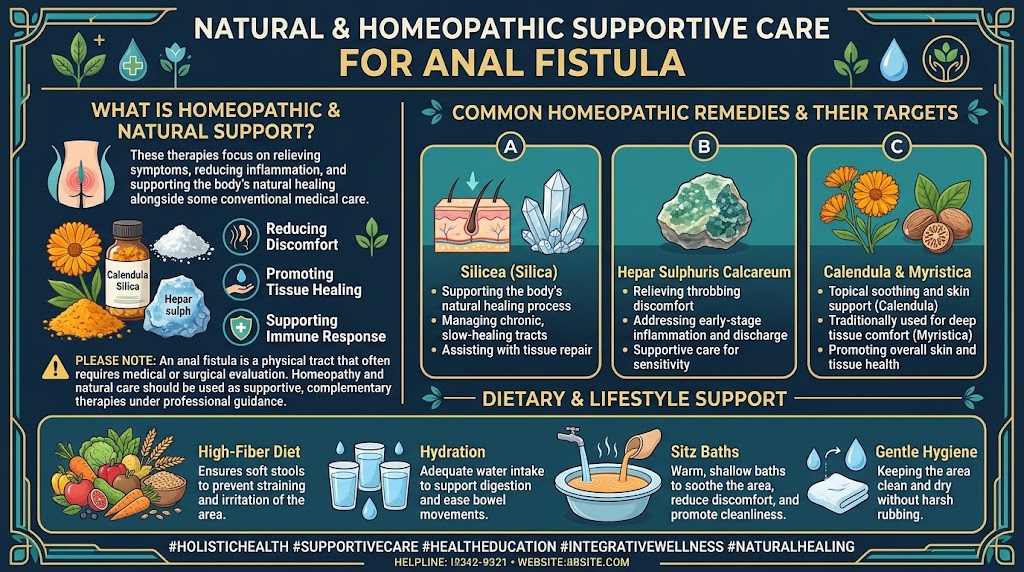 Practitioners of homeopathy select remedies based on the patient’s specific symptom patterns, discharge characteristics, and overall constitution:
- Silicea: Often prescribed for chronic, slow-healing wounds, persistent pus discharge, and indurated (hardened) tissues around the fistula tract.
- Calcarea Sulphurica: Used in traditional homeopathy when there is thick, yellow, or purulent drainage associated with lingering infections or abscesses.
- Calcarea Phosphorica: Referenced in clinical case studies for managing localized pain, discomfort, and recurrent discharge.
More than just a medical condition, an anal fistula indicates that the body needs more extensive treatment. Conventional therapies provide a straightforward solution, but they could not stop the issue from recurring.
Targeting the fistula’s underlying cause, homeopathy offers a safe, natural, and customized route to recovery. It promises a long-term fix by enhancing your body’s natural capacity for healing. We advise you to discuss all of your alternatives with a qualified homeopath or surgeon to create a customized treatment plan that is ideal for you.
Preventing Recurrence
Recurrence prevention begins with completing the treatment plan made with your colorectal surgeon. An anal fistula can return if a tract remains or a new abscess develops, so attend scheduled examinations even after pain and drainage settle. Your follow-up may include inspection of the surgical site and discussion of any ongoing discharge, swelling, or discomfort. Report a new lump or fever promptly, since these can signal infection.
Daily bowel habits also matter during recovery. Keep stools soft with adequate fluids and fiber from foods such as vegetables, fruit, and whole grains, unless your clinician has advised otherwise. Avoid straining and prolonged toilet sitting, which can aggravate the anal area. Clean gently with water after bowel movements, then pat the skin dry; harsh wiping and scented products can irritate healing tissue.
Underlying conditions deserve attention because Crohn’s disease and other inflammatory bowel disorders can increase the risk of persistent or recurring fistulas. If you have Crohn’s disease, coordinate care between your gastroenterologist and colorectal surgeon, and take prescribed medication as directed. Smoking can impair wound healing, so ask your clinician about support for stopping. No home measure guarantees prevention, but early assessment of renewed symptoms can identify a problem before another abscess forms.
Prevention and follow-up
Your follow-up schedule depends on the procedure and how the wound heals. Keep each appointment, and tell your clinician whether drainage is decreasing, unchanged, or increasing. After seton placement, do not remove or adjust it yourself; your surgeon will advise on care and when it should be reviewed. Seek prompt medical advice for worsening pain, redness, fever, or a sudden increase in discharge.
| Step | What to do | Why it matters |
|---|---|---|
| Surgical follow-up | Attend reviews and report changes | Checks healing and possible persistent disease |
| Bowel care | Maintain soft stools and avoid straining. | Limits irritation during recovery |
| Gentle hygiene | Rinse with water and pat dry. | Reduces irritation around healing skin |
| Condition management | Follow prescribed care for Crohn’s disease. | Addresses a factor linked to recurrence |
Final Words
An anal fistula is an abnormal tunnel, often left after an infected anal gland develops an abscess. You may notice persistent drainage, irritation, pain, or swelling near the anus, but symptoms alone cannot show the tunnel’s route or depth. A clinician examines the area and may use imaging to map complex fistulas. Prompt assessment matters because an untreated tract can continue to drain or develop another abscess, while treatment depends on its relationship to the anal sphincter.
Care is tailored to protect bowel control while treating the fistula. A surgeon may recommend fistulotomy for a suitable, straightforward tract or a seton, a thread passed through the fistula, when staged drainage is needed. Crohn’s disease and other underlying conditions also affect treatment decisions. Warm sitz baths, gentle cleansing, adequate fluids, and fiber can support comfort and bowel regularity, but these measures do not close the tract or replace medical care.
After treatment, follow your clinician’s wound-care instructions and attend follow-up visits so healing and any persistent drainage can be assessed. Keep stools soft, avoid straining, and seek care if pain, swelling, fever, or discharge worsens, since these symptoms can signal infection or recurrence. Because fistulas differ in cause and anatomy, your treatment plan should reflect your examination findings, surgical history, and any conditions such as Crohn’s disease.
FAQ

How much does anal fistula surgery cost?
The cost depends on the procedure, anesthesia, facility, location, and insurance coverage. A surgeon’s evaluation is needed to recommend treatment and provide an estimate, and fees may differ if the fistula is complex or requires more than one procedure.
How long does it take to recover from anal fistula surgery?
Recovery time varies with the operation and the fistula’s complexity, and healing can take several weeks or longer. Follow your surgeon’s instructions for wound care and activity, and attend follow-up visits because some procedures require ongoing checks while the wound heals.
What are the risks of anal fistula surgery?
Possible risks include infection, bleeding, delayed healing, recurrence, and changes in bowel control. The likelihood of complications depends partly on the fistula’s path and the amount of sphincter muscle involved, so the surgeon should explain the risks of the recommended procedure.
Can an anal fistula heal without surgery?
An anal fistula usually does not close permanently without medical treatment, and home remedies cannot eliminate the tract. Warm baths and gentle hygiene may ease discomfort, but a clinician should assess the fistula and discuss suitable treatment, especially if symptoms worsen or fever develops.
Can acupuncture or homeopathy cure an anal fistula?
There is reliable evidence that acupuncture and homeopathic remedies can close an anal fistula. They should not replace assessment and treatment by a qualified clinician, since delaying care can allow infection or symptoms to persist.
Is anal fistula surgery worth it if the fistula keeps coming back?
Surgery may be worthwhile because it aims to treat the tract and reduce ongoing infection or drainage, but recurrence can still happen. The best option depends on the fistula’s anatomy and prior treatment, so ask a colorectal surgeon about expected benefits, risks, and alternatives.
What mistakes can delay healing after treatment?
Skipping follow-up appointments, neglecting wound care, or relying on home remedies instead of prescribed treatment can delay healing or leave a problem untreated. Follow the care plan from your clinician, and seek medical advice promptly for increasing pain, swelling, fever, or worsening drainage.
Holistic Treatment for Anal Fistula in Philadelphia
The Philadelphia Homeopathic Clinic could be your best choice for a natural anal fistula’s treatment. Our clinic is a subdivision of the Philadelphia Holistic Clinic, where all holistic techniques are available under one roof.
For an appointment for an initial evaluation, contact us at (267) 403-308585 or use our online scheduling application.